
Companies in our sector are facing a moment
extremely complex history, marked by geopolitical tensions that
are generating a significant increase in energy costs and
fuels, with direct effects on the entire logistics chain and
final prices for businesses, families and citizens. He emphasized this
Guido Grimaldi, president of the Logistics Association
of Sustainable Intermodality (ALIS), commented on the work
of the Council of Members of the Organization held today at the headquarters of the
national team in Rome.
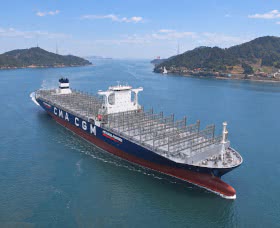
«The critical issues related to navigation in some
strategic areas such as the Strait of Hormuz - Grimaldi noted -
are leading to increases in sea freight rates, premiums
and operating costs, with an impact that extends to
all modes of transport. Although he had expressed
appreciation for the emergency measures adopted by the Government in
support for the sector in response to market crises
including the reduction of excise duties on fuels and
the tax credit for road haulage companies, however, we hear
the need to emphasise the need to broaden the
support for a sector considered economically and socially
strategic strategy, as well as to further strengthen the
of support and compensation".
"There is in fact a real risk - he continued
Grimaldi - that the economic stability of the country is compromised and, for the
To be even clearer, there is a risk of paralysis
of a sector that cannot simultaneously support
uncontrolled increases in costs resulting from the situation
and European taxation such as the ETS. I recall that the RINA estimates
indicate an economic impact of the ETS on the European naval fleet
equal to 5.7 billion in 2025 and over 8.2 billion in 2026, to which
add the costs of FuelEU. We therefore hope that the EU will reach the
the revision of this directive within the deadline of
July that has been indicated and, at the same time, that
of our government increased the resources for Sea incentives
Modal Shift and Ferrobonus, bringing them to 150 million euros per year.
In addition, we hope that the proceeds of the ETS will be reinvested in the
sector, i.e. intended for those who work in intermodality
thus responding to the principle that "this
that comes from the sea, returns to the sea", in order to feed
a virtuous and sustainable circle".















 - Via Raffaele Paolucci 17r/19r - 16129 Genoa - ITALY


