Independent journal on economy and transport policy
20:55 GMT+2
POLICY
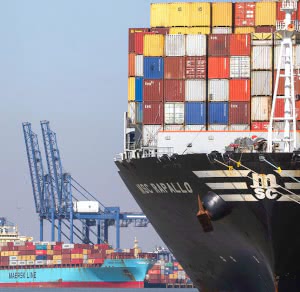
The European Commission presents two strategies to promote the competitiveness, sustainability, security and resilience of EU ports, maritime transport and shipbuilding
A high-level council will be established
Bruxelles
March 4, 2026
Today, the European Commission has adopted two strategies that have
the objective of promoting competitiveness, sustainability,
the safety and resilience of the maritime transport sector
by intervening in the port, maritime and transport sectors
shipbuilding.
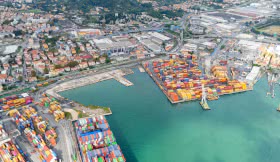
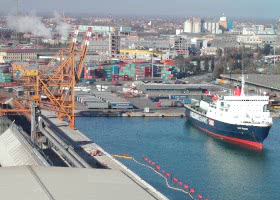
The Ports Strategy proposes actions focusing on five
priorities to address the most pressing challenges, with the
before it aims to strengthen competitiveness,
innovation and digitization. To this end, the Commission,
to improve coherence and coordination, develop
Criteria and guiding principles for financing and investment
in third-country ports. It will also develop criteria and
guidelines on foreign ownership and control,
focusing on ports identified as infrastructure
civil and military dual-use strategic strategies, and will support the
digital and green transformation by promoting innovation,
the expansion and adoption of innovative technologies.
The second priority is the promotion of
energy, sustainability and industrial transition
clean. The Commission has announced that it will accelerate the
the issuance of authorisations and provide procedures for
faster assessment for strategic port projects in
and that the forthcoming Action Plan for Energy and Environment
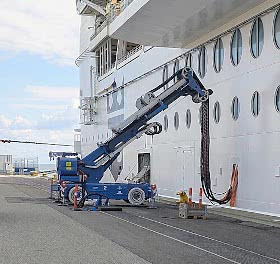
electrification will support the electrification of ports,
access to the grid and the deployment of clean energy. In addition,
Partnerships will be promoted for energy cooperation in the
port areas and surrounding areas for sustainable use
including hydrogen.
The third priority aims to protect and put in place
security ports. In particular, the
existing guidelines, taking into account emerging and
promoting a global level playing field for the
security of EU ports. To combat drug trafficking,
building on the work of the European public-private partnership
Ports Alliance, the Commission will set up frameworks for
assessments of third country ports and for the control of
criminal records of port workers. In addition, the Commission
will establish a forum for the exchange of good practices between the
port and IT security authorities of the States
and a security risk assessment at the
to identify the most urgent risks and measures to
appropriate to mitigate them.
The fourth priority action concerns access to finance
and investments. The Commission announced that, on the basis of the
on existing EU funding instruments, including the
Connecting Europe Facility, funding for
cohesion and InvestEU, will support ports with principles of
funding to improve coordination and
the efficiency of EU funding. In addition, it will facilitate
access to counselling services and risk reduction tools
risk, with particular attention to the needs of ports of
small and medium-sized sizes.
The last priority is related to social cohesion,
quality skills and jobs, and the strategy
highlights the important role of small and medium-sized ports
and outlines specific initiatives on innovation, energy and
security and connectivity to support these ports.
In addition, the Commission will support the development of a
Skilled work of the new generation in all sectors
through actions under the Blue Economy Strategy
generational renewal. A new Pact for Skills for the industry
will focus on improving skills,
the retraining and inclusion of workers. The Commission
will also develop guidelines on the application of the
maritime safety legislation to port workers who
operate on board ships, as well as on the safe handling of
alternative fuels in ports.
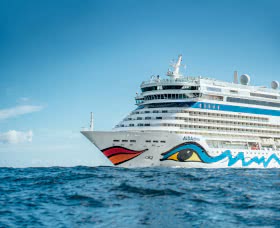
The second maritime industrial strategy presented today
It is founded on three pillars. The first, "Build, equip and
repair", focuses on capacity building
of the European shipbuilding industry and the leadership of the European shipbuilding industry
technological development of Europe. This pillar includes actions aimed at
promoting the EU's industrial sovereignty and creating
synergies along the entire maritime value chain. To this end, the
Commission to launch an 'EU Industrial Maritime Value'
Chain Alliance". The strategy also aims to accelerate the
digital and circular transformation of European shipyards,
maximising public demand and funding and improving the
global level playing field for industry
shipbuilding.
The Transport and Connections pillar includes measures
to strengthen competitiveness, sustainability and
maritime transport connectivity. In particular,
includes measures to simplify administrative procedures and
reporting for maritime transport, to support the
green and digital transition, to promote maritime transport of
quality and improve agility and attitude
proactive in international relations. The Commission has
specified that, together with the Member States, it will strengthen the
the EU's commitment to the International Maritime Organization on
global maritime standards, to help achieve global maritime conditions
of parity. The strategy then provides for the continuation of the
the use of the existing guidelines on aid for
State for maritime transport to maintain the current quotas of
and encourage ships to choose EU flags.
The third pillar, "Safety and Security", aims to
Strengthen Naval, Underwater, Dual-Use and Military Capabilities
to increase security and resilience. The
Commission specified that the action mobilises several instruments
to support shipbuilding capacity, strengthen the
awareness of the maritime sector at EU level and pursue a
Support mechanism for the construction of dual-use ferries
civilian and military with improved military specifications.
The European Commission has explained that the strategy aims to
mobilise EU, national and private funding to support
investments in fleet decarbonisation, innovation
and in the defense. This includes using existing funds
such as the Connecting Europe Facility, the Fund for
Innovation, Horizon Europe, the programmes of the European Fund for
defence, national revenues from the EU ETS and
risk-sharing instruments through InvestEU, pending
the adoption of the next Multiannual Financial Framework.
To ensure effective implementation of the Ports Strategy
and the maritime sector, the Commission will set up a Council
for maritime industries and ports, chaired by the
responsible Commissioner and the Vice-Presidents.
- Via Raffaele Paolucci 17r/19r - 16129 Genoa - ITALY
phone: +39.010.2462122, fax: +39.010.2516768, e-mail
VAT number: 03532950106
Press Reg.: nr 33/96 Genoa Court
Editor in chief: Bruno Bellio No part may be reproduced without the express permission of the publisher






 Today, the European Commission has adopted two strategies that have
the objective of promoting competitiveness, sustainability,
the safety and resilience of the maritime transport sector
by intervening in the port, maritime and transport sectors
shipbuilding.
Today, the European Commission has adopted two strategies that have
the objective of promoting competitiveness, sustainability,
the safety and resilience of the maritime transport sector
by intervening in the port, maritime and transport sectors
shipbuilding.











 - Via Raffaele Paolucci 17r/19r - 16129 Genoa - ITALY


