Independent journal on economy and transport policy
14:13 GMT+2
This page has been automatically translated by Original news
POLICY
European shipowners and producers welcome the EU strategy for the sector. Less convinced of the proposal the German port operators
Raptis (ECSA): rejected any protectionist request. Jürgens: there is a clear desire to strengthen European ports as a growth engine
Bruxelles/Roma/Amburgo
March 4, 2026
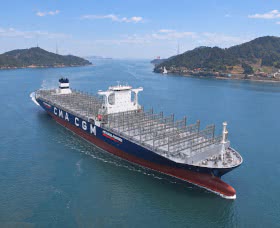
The association of European shipowners has welcomed the European Marine Strategy presented today by the European Commission(of 4 March 2026), a policy which - it has evidenced European Shipowners - ECSA - in light of the recent geopolitical instability recognizes the strategic role of the marine transport for energy security and for the supply chain and proposes measures to strengthen the international competitiveness of the European marine transport and the entire industrial cluster.
In addition, ECSA found that the strategy strongly rejected any appeal to the adoption of protectionist measures and stressed the need for investment in support of the competitiveness of the European industry. The association has evidenced also that the strategy affirms the need to concentrate on the energy transition and proposes the use of the national proceeds of the EU ETS system for the adoption of clean fuels and clean technologies for the marine transport, and it also prospects the conditions for the competitiveness of the European marine transport, committing itself to define an adequate normative and fiscal framework. The human element, training and requalification are also considered an absolute priority for the competitiveness of the sector, in line with international law and regulation.
Recalling that "though the European fleet is growing steadily, other fleets are growing faster," the Secretary-General of ECSA, Sotiris Raptis said, "the Commission has rejected any protectionist request and has instead given priority to investments. It is so - said Raptis - that we protect competitiveness, we realize decarbonization and strengthen at the same time the energy security of Europe". For ECSA, "the Commission should take a further step forward and - Raptis has explained - engage in so that the measures of the EU are transient and are withdrawn once adopted a global agreement at the International Maritime Organization".
That the priorities of the shipowning industry have been incorporated in the strategy proposed by the European Commission has found it the Italian association Assarmatori, according to which "the texts reflect a balanced approach and make synthesis between the needs of the field, including several priorities that Assarmatori has carried out in the last year and a half in European and national headquarters. Among these - it has specified the association - it deserves to signal the revision of the directive ETS, the invitation to the Member States to allocate more resources deriving from this regime to the decarbonization of the field, the necessity to solve the problems of competitiveness of the ports of transhipment, the simplification of the criteria of technical vaglio of the European Taxonomy, the recognition of the irreplaceable value of the aid of State to the European flags and the dual-use of the ones of the ones of the ones
"It is - it has found the secretary general of Assarmatori, Alberto Rossi - of themes dear to the Italian armament that finally find the right of citizenship in documents of address of the European Commission. It is a significant step forward but - it has punctuated Rossi - we must not yield to easy enthusiasm: the way these priorities will be realized and grounded by the EU will make the difference between an industry able to compete with the rest of the world and an industry burdened by myopic legislation such as the one we suffer today. Fundamental has been until now, and even more will be in the future, the commitment of the European commissioner to the Transports Apostolos Tzitzikostas and the executive vice president of the European Commission Raffaele Fitto, who, among the various delegations, supervises transport policies. In the same way listening, engagement and protagonism of the Italian government, starting from the ministers Salvini, Pichetto Fratin and Musumeci, vice-minister Rixi and the CIPOM, allowed to reverse some dangerous tendencies that emerged in Brussels in recent months, including an excessive protectionism promoted by Germany, Holland and France, which was about to materialize in duties on the import of ferries, The next few months, with the revision of the ETS directive - it has concluded Rossi - will be crucial for our sector. The premises are good but it will not be easy to overcome some obstacles, including the excessive myopia of parts of the European Commission and of some Member States regarding the solutions of which the industry needs, firstly the derogations for the ports of transhipment, the Autostrade del Mare and the connections with the islands under the ETS".
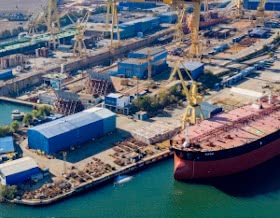
A strong applause for the strategy proposed by the European Commission came from SEA Europe (Shipyards' & Maritime Equipment Association of Europe), according to which "this historical initiative directly meets the demands of the European maritime manufacturing industry through the SEA Europe Manifesto of April 2024 and further detailed in our 22 concrete recommendations. The shipyards and the producers of marine equipment - it has emphasized the association of European shipyards and marine producers - are strategic industrial resources. They support Europe's maritime and naval security, strengthen its industrial resilience and drive its maritime and blue economy. SEA Europe and its associates welcome the new strategy as an unprecedented result: a decisive recognition of the importance of maritime production for strategic autonomy, economic security, defence, trade, sustainability, innovation, resilience and competitiveness of Europe".
"We welcome with particular favor - the Secretary-General of SEA Europe, Christophe Tytgat has specified - the strong attention of the strategy to the stimulus of both supply and demand. By creating incentives for shipowners to choose shipyards and producers of European marine equipment, while at the same time offering access to funding to stimulate investments in modern, efficient, innovative and sustainable naval production processes, within a framework of mutually beneficial European preferences in emerging and high added value segments, it is essential to ensure that European industrial capacities remain competitive and future-proof".
In the absence of a timely comment from the association of the European ports ESPO, to present an evaluation of the strategy for the ports proposed from the European Commission is the association of the German harbour operators ZDS that has defined it "an important impulse", "but does not meet the current requirements of the European ports in terms of strategy, economy and security policy". "The strategy - it has clarified the president of the ZDS, Sebastian Jürgens - sends the right signals in terms of resilience, safety and innovation. But he remains defensive. There is no clear will to strengthen European ports as a growth engine. The ports are seen too much as regulatory objects and too little as the foundation of a competitive Europe".
According to ZDS, "Europe must engage more intensively in discussions on new markets and solid trade agreements. This does not only concern the increase in freight traffic, but also the management of international investments and the branches of European port societies in third countries. Moreover - it has observed the German association - the strategy still does not adequately address the infrastructural and superstructured requirements, as well as the requirements of qualification and formation of the harbour field". "The marine ports - said Jürgens - are strategic infrastructures for the competitiveness, the security of supply and European sovereignty. This importance must finally be reflected in financing, regulation and financing principles.'
For ZDS, there is also the "pressant need to improve public financing of ports. The guidelines proposed - according to the association - are too schematic and do not justice to the increasing diversity of the tasks carried out by the ports, the energy supply and the safety requirements to military mobility". "We need - Jürgens has explained - of a tool of State aid dedicated and modern for the marine ports. The general block exemption regulation is no longer sufficient.'
Finally, remembering that the European Commission also intends to establish a high-level council of EU ports, for ZDS "the crucial factor will be the way in which the guidelines and regulations announced will be implemented in practice".
- Via Raffaele Paolucci 17r/19r - 16129 Genoa - ITALY
phone: +39.010.2462122, fax: +39.010.2516768, e-mail
VAT number: 03532950106
Press Reg.: nr 33/96 Genoa Court
Editor in chief: Bruno Bellio No part may be reproduced without the express permission of the publisher







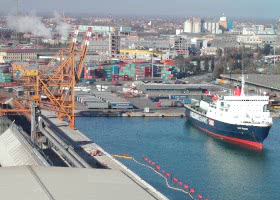
 The association of European shipowners has welcomed the European Marine Strategy presented today by the European Commission













 - Via Raffaele Paolucci 17r/19r - 16129 Genoa - ITALY


