
Interferry, the international association representing
shipping companies operating ferry fleets,
fully appreciated the new strategy for the maritime industry and
EU port project presented on Wednesday by the European Commission
 (
(
of
4
March 2026). In particular, Interferry highlighted that the
The plan recognises the strategic importance of the ferry sector and
urges the Member States to reinvest the revenues from
the application of the Emissions Trading System (ETS)
in maritime decarbonisation, thus transposing the
recommendations of the association.
Stressing that for the decarbonisation of the fleet
The maritime industry faces a financial need
estimated annual between €2.4 billion and €8.5 billion, Interferry has expressed
satisfaction that the Commission has responded to the
requests from the ferry industry to use a part of the
significant of the approximately ten billion euros raised annually
in the ETS to support the uptake of clean technologies. This
includes - the association noted - the proposal for a mechanism
EU dedicated to providing shipping companies with ETS allowances for
sustainable fuels and clean propulsion.
In addition, Interferry noted that the strategy presented by Brussels
takes note of recent findings of group studies
environmentalists who highlight the wide potential of
of the electrification of ferries. The association specified
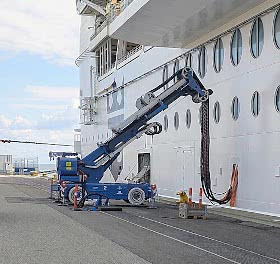
whereas, for the ferry sector, the electrification of ports for
facilitating the power supply from the ground is the
easier solution for immediate decarbonisation, in
how, by supplying electricity to ships at the quayside, the
Member States can drastically reduce emissions in cities
and reduce the risks of operators' investments in
battery-electric ships.
"The Commission -
commented the Director for Institutional Affairs of Interferry,
Johan Roos - is moving in the right direction by recommending
that ETS funds are used exactly where they are used
harvests: in maritime decarbonisation. However, we must
note that funding must be targeted at the sector and the
fleet in their entirety and must not be limited to
only to prestigious projects without a wide-ranging impact.
We know what we need to do to decarbonise and what we need to do
helps is the practical support, whether it's power
shore-side electric, electrification or alternative fuels".
Finally, Interferry also expressed appreciation for the commitment
to alleviate the administrative burden and to recognise that
EU legislation needs to be reviewed once it has been established
at the International Maritime Organization, a global measure to
decarbonisation in order to avoid double payments.
Interferry made a single note of the new strategy
with regard to what is proposed for the European shipbuilding industry,
with respect to which the Commission - explained the association - has
attention by providing for measures - specified
Interferry - which however must support, rather than
distort the dynamics of the free market.


















 - Via Raffaele Paolucci 17r/19r - 16129 Genoa - ITALY


