Independent journal on economy and transport policy
18:34 GMT+1
This page has been automatically translated by Original news
PORTS
ETS maritime, FEPORT supports the anti-elusion measurement linked to the loads
It is the most effective solution - it supports the federation of European terminalisti - to protect the competitiveness of the ports of the EU
Bruxelles
October 30, 2026
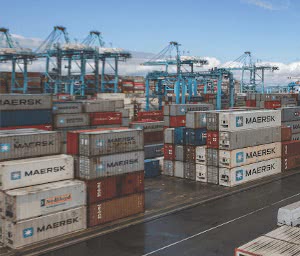
The European ports that live of transhipment of container continue to fear that the system of exchange of ETS emissions of the European Union applied to the marine field from the beginning of 2024 (with obligation of return of the quotas gradual) shifts the traffics towards the harbour hubs extra-EU. This concern has been reiterated today by the FEPORT, the federation of the European port terminalisti, which has analyzed three anti-elusion measures, in order to avoid that this transfer of traffics happens outside the Union, currently subject to debate within the framework of the revision of the European directive ETS proposed last July from the European Commission(of 17 July 2026).
The norm previews that the ships active on marine routes with only one between the ports of departure or internal arrival to the area EU-SEE pay quotas ETS on 50% of the emissions of the trips to and to ports extra-EU, instead that the 100% paid browsing on routes between internal ports to the area EU-SEE. The revision of 2023 of the directive excluded from these "stopports" a list of transhipment hubs close to the EU. With its last proposal the Commission intends to lower from 65% to 50% the threshold of container transhipment volumes beyond which the ports are included in that list, as well as to include the ports within 150 nautical miles from an EU port, provided they have a fishing greater than 11 meters, a length of dock more than 250 meters and crane of dock suitable for transhipment operations, and to update the list every year.
In this context, FEPORT expressed its position on three possible solutions currently under discussion: a reduction of the ETS obligations proportional to the distance traveled from the ships, the exemption from the system of some European ports particularly exposed to international competition and a mechanism of reduction of the quotas due based on the actual destination of the enlivened container.
The Commission has proposed in effect also a temporary derogation, until 31 December 2035, for portacontainer from at least 10,000 teu of capacity on routes greater than 300 nautical miles based on the destination of the transported containers. The number of quotas to be returned would be reduced according to the quota of container downloaded in an EU port only to be reimbarcati towards an extra-EU destination. The unpaid shares would be cancelled and not auctioned. The principle is that not all containers transiting through a European port are intended for the Union market. A substantial part of the volumes enlivened in the large port hubs is constituted by container that are downloaded from one ship and subsequently boarded on another, to continue towards a final destination located outside of Europe. This measure is aimed at hitting the most mobile volumes, i.e. the goods that does not have Europe as a destination, without distinguishing between ports or routes.
These transhipment traffics, according to FEPORT, are more exposed to the risk of transfer to extra-Community ports. If a company can perform the same operations in a Mediterranean hub not subject to ETS, thus avoiding part of the costs associated with emissions, it may be induced to move out of the Union part of its activities. This cargo-based measure therefore aims to reduce ETS obligations in proportion to the share of transhipted containers that are not intended for the European market.
This measure, moreover, would not empty the tariff of carbon, because the ships would pay for the cargo quota destined to the EU market, and the cancellation of the quotas would protect the environmental integrity. However - in the opinion of some observers - this measure would require reliable data on transit containers and administrative controls, and could favor those who concentrate the transhipment activity. In addition, the derogation would be limited to larger ships and long routes and would not cover feederage or maritime services within a short-term distance.
This temporary derogation "cargo-based" is the measure supported by FEPORT. According to the federation, the proposal has an important advantage since it does not attribute preferential treatment to certain ports or marine connections, but it intervenes directly on the component of the traffic that is more exposed to the risk of delocalization. FEPORT considers this essential element to avoid competitive distortions and preserve the neutrality of the system against the different routes and European ports.
The Commission has, however, included in its project a mechanism which takes into account the actual composition of the cargoes, but has limited the application through two conditions: a dimensional threshold of the ships and a minimum distance of the connection. This proposed solution does not coincide entirely with the model FEPORT would like to strengthen: the federation asks in fact to extend the mechanism also to the incoming trips, so as to expand the protection of the traffics of transhipment.
Among the solutions in question there is also a discount of increasing quotas with the distance between port of extra-EU origin and European port of call. A much easier measure to apply than that based on the ship's cargo, because the distance is an objective data, and it would attenuate the convenience of making an intermediate limiting stop. But, according to the FEPORT, this second measure would push the navigation companies to reduce the ports of call and to serve Europe from more distant ports, modifying the marine rotations without reducing the emissions and still weighing on the ships with multiple ports.
The third measure provides for a total or partial exemption for some EU ports more exposed to international competition. If the proposal is aimed at avoiding the risk of hijacking where it is higher, such as for example for port hubs of South Europe such as Algeciras, Valencia, Gioia Tauro, the Piraeus or Sines, however the FEPORT fears can introduce a distortion of the internal market, with favoured ports to the detriment of others and with harbour terminals that could benefit from more favorable regulatory conditions than the competitors. Moreover, the identification of the beneficiary ports would require objective and shared criteria, with the risk of opening a comparison between Member States and operators on the selection of the ports to be exempted. This would add a decrease in revenue from the sale of ETS quotas and, above all, a weakening of the economic incentive to reduce emissions for the companies that use the exempted ports.
In the light of these observations, the federation of European terminalisti asks not to experiment with proposals "neither robust in the substance nor certain in the impact" and to preserve the plant of the European Commission, which considers a coherent package.
The game is now in the hands of the European Parliament and the Council, which aim to an agreement on the ETS review by the first quarter of 2027.
- Via Raffaele Paolucci 17r/19r - 16129 Genoa - ITALY
phone: +39.010.2462122, fax: +39.010.2516768, e-mail
VAT number: 03532950106
Press Reg.: nr 33/96 Genoa Court
Editor in chief: Bruno Bellio No part may be reproduced without the express permission of the publisher







 The European ports that live of transhipment of container continue to fear that the system of exchange of ETS emissions of the European Union applied to the marine field from the beginning of 2024 (with obligation of return of the quotas gradual) shifts the traffics towards the harbour hubs extra-EU. This concern has been reiterated today by the FEPORT, the federation of the European port terminalisti, which has analyzed three anti-elusion measures, in order to avoid that this transfer of traffics happens outside the Union, currently subject to debate within the framework of the revision of the European directive ETS proposed last July from the European Commission












 - Via Raffaele Paolucci 17r/19r - 16129 Genoa - ITALY


