
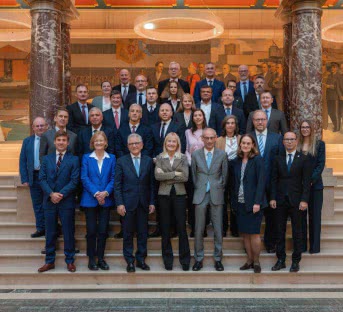
Yesterday in Lille, the first council meeting was held
of the administration of the Customs Authority of the European Union
(EUCA), whose establishment was decided last March by
Council and Parliament of the EU within the framework of customs reform
European law entered into force in September
 (
of
the 30th
March 2026). The EUCA council elected the Polish
Malgorzata Krok as president and adopted the first
governance and administrative procedures to lay the foundations for
the start-up and organizational development of the agency.
In the coming months, work will continue to make EUCA
a fully operational institution. A start of the
activities as soon as possible starting from
next year, with full capacity achieved
operational expected for the period after 2030.
At full capacity, the agency will employ about 300 people and will deal with,
among other things, the development and management of the data hub
EU customs policy, one of EUCA's key tasks. The hub will serve as
from a central platform where customs data will flow
relevant at the EU level, replacing over 100 national systems
currently used in the various Member States.
"In a world characterized by rapidly evolving trade flows and
from hybrid threats - emphasized the European Commissioner for
Trade and economic security, Maros Sefcovic, on the occasion
of the start-up of EUCA activities - Europe needs to
A customs system up to the challenges we must face.
The EU Customs Authority will help strengthen
our common external border, to better protect citizens
and businesses and to ensure that customs operate in a unified manner in
the entire single market. It is about equipping the EU with the tools
necessary to act more strategically, quickly, and
effective. Our customs reform will transform customs
of the EU into an even more dynamic and based force
on intelligence, capable of countering modern threats and
to meet economic needs."




























 - Via Raffaele Paolucci 17r/19r - 16129 Genoa - ITALY


