Independent journal on economy and transport policy
00:19 GMT+1
TRADE
US-China, the trade détente also involves ports and shipyards
Beijing extends the suspension of port charges on US ships and investigations into the repercussions of American measures on its maritime industry
Pechino
November 9, 2026
Confirmation has also come from Beijing of the intention to
preserve the trade truce reached between the US and China. Today,
In fact, the Chinese government has ordered a further extension of the
suspension of some of the trade and maritime measures adopted
towards the United States in the context of the
between the two major world powers, implementing
the agreements reached in the eighth round of economic consultations
and trade agreements between the two countries and the agreements reached during the
last September's meeting in Washington between the respective leaders
Donald Trump and Xi Jinping.
The measures, announced today by the Commission for
customs tariffs of the Council of State and the Ministry of Foreign Affairs
Beijing transports, provide for the postponement to January 10, 2027 of the
reinstatement of measures against U.S. shipping and the
Maintaining a partial suspension of duties for another two months
on imports from the United States. In particular, on the
China will continue to suspend customs duties for another two months
the application of an additional rate of 24% on goods of
US origin. However, the duty will remain in force
additional 10%. The measure concerns the additional component
tariffs introduced as part of China's response to the
American commercial initiatives and is therefore not equivalent to a
complete elimination of duties on imports from
United States.
For the maritime sector, the Decision takes on a
particular importance. The Ministry of Transport in Beijing, in fact,
extended the suspension of tariffs until 10 January 2027
special port applicable to ships connected to the United States.
At the same time, the investigation will continue to be suspended
on the effects of US security policies and
on the development interests of the maritime industry, the
shipbuilding and related supply chains.
These are two measures that were introduced in 2025 in the
framework of the Chinese response to Washington's initiatives against the
maritime and shipbuilding sector. Their suspension
therefore, at least for the moment, avoids the application of charges
to the ships concerned and the continuation of a discussion
institutional that could have further fueled the
tensions between the two maritime industries.
Last September, Trump and Jinping agreed to
work towards a reciprocal reduction of duties on a single volume
of about 60 billion dollars of goods, through a
more favourable tariff treatment of €30 billion
dollars of non-sensitive products exported by each country. Among the
sectors concerned include, for US exports to the
China, agricultural products, fish, timber, cosmetics and devices
doctors, while on the Chinese side are included, among others,
toys, household items and consumer products. The agreement
aims to reduce the effects of protectionist measures that in the
recent years have progressively increased the
bilateral trade. The confrontation had taken on dimensions
particularly relevant in 2025, with the re-election of Donald
Trump to the US presidency, when Washington and Beijing
had intensified the imposition of tariffs on each other
levels, reaching levels that significantly compromise
trade flows and fuel business concerns
international associations.
The suspension of the additional rates of the
24% on the Chinese side is therefore an important element of the
truce, but does not represent a cancellation of the
Retaliation. Beijing retains an additional 10% tariff
on affected U.S. goods and the Tariff Commission
of the Chinese State Council explicitly warned
which "will continue to closely monitor the initiatives
undertaken by the United States and will adjust, if necessary, the
retaliatory tariff measures'.
In particular, the Chinese Commission recalled the intention
repeatedly expressed by the United States to resort to the
Section 301 of the Trade Act 1974 to replace the tariffs introduced
on the basis of the International Emergency Economic Powers Act (IEEPA),
the law on economic powers in the event of an international emergency.
The latter legal basis was in fact declared by the
The U.S. Supreme Court, with its ruling of February 20,
unsuitable for giving the President the power to impose duties. The
However, the ruling did not eliminate the tariffs adopted on the basis of
other legislative provisions, including those provided for by the
Section 301, which allows Washington to react to practices
commercial considered unfair. The issue is
particularly delicate because the use of Section 301
could allow the US administration to maintain
a significant part of the tariff pressure on China
through a different legal instrument. Beijing has therefore
clarified that the extension of the suspensions must not be
interpreted as a renunciation of one's own prerogatives of response.
Even more directly linked to the interests of the
maritime transport is the decision of the Ministry of Foreign Affairs
Beijing Transports to Keep Port Fees Suspended
on US ships and the investigation of the repercussions
of American policies on the maritime and shipbuilding industry
Chinese Government. The measure is part of the broader debate
between Washington and Beijing for control of the global supply chains of the
shipping, shipbuilding and logistics. In the
2025 the United States had initiated, through Section 301,
an initiative against Chinese trade practices in the sectors
shipbuilding, logistics and maritime transport,
providing for charges for ships linked to China and
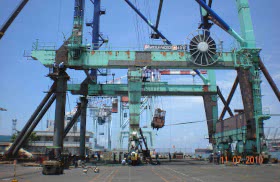
additional measures on products in the supply chain, including cranes
port and intermodal looms
(
of 10
and 18
April and 13
October 2025).
The Chinese response had come with
the introduction of special port fees for US ships
and with the opening of an investigation into the effects of the American measures
on the safety and development interests of the national maritime sector
(
of 30
September and 10
October 2025). The suspension of these measures had already
represented one of the elements of the previous détente
commercial and is now further extended.
If the decisions taken in Beijing do not mean that the
disputes have been resolved, since the measures are suspended and not
repealed, however, the suspension takes on a meaning that goes beyond
the simple reduction of port charges: it is a signal
of willingness to keep negotiations open on a
sector considered strategic by both governments. The
shipbuilding and maritime services, in fact, have become one of the most important
areas that are more sensitive to economic competition and
between the two powers. For shipowners, operators
shipbuilding companies, the extension constitutes
therefore a positive element of predictability in the short term
period. The deadline of 10 January 2027 will represent
however, a new critical step, especially in the light of the
decisions that the US administration will take
on the possible recourse to Section 301 and possible subsequent
Beijing's responses.
- Via Raffaele Paolucci 17r/19r - 16129 Genoa - ITALY
phone: +39.010.2462122, fax: +39.010.2516768, e-mail
VAT number: 03532950106
Press Reg.: nr 33/96 Genoa Court
Editor in chief: Bruno Bellio No part may be reproduced without the express permission of the publisher






 Confirmation has also come from Beijing of the intention to
preserve the trade truce reached between the US and China. Today,
In fact, the Chinese government has ordered a further extension of the
suspension of some of the trade and maritime measures adopted
towards the United States in the context of the
between the two major world powers, implementing
the agreements reached in the eighth round of economic consultations
and trade agreements between the two countries and the agreements reached during the
last September's meeting in Washington between the respective leaders
Donald Trump and Xi Jinping.
 (
















 - Via Raffaele Paolucci 17r/19r - 16129 Genoa - ITALY


