Independent journal on economy and transport policy
01:45 GMT+2
This page has been automatically translated by Original news
SHIPYARDS
The Ligurian Shipbuilding Observatory is born: a sector worth two billion euros and over 10 thousand employees
Port Authority, Confindustria Genova and Unione Industriali Savona start permanent monitoring of the sector
Genova
October 16, 2026
The Ports of Genoa strengthen their presence in one of the sectors
most strategic industrial sectors. The System Authority
Port of the Western Ligurian Sea, Confindustria Genoa and the Union
Savona industrialists presented the first report
of the Socio-economic Observatory "Enterprises, Work, Value",
created with the aim of continuously monitoring the evolution of the
shipbuilding and ship and nautical repairs in ports
of Genoa and Savona-Vado Ligure. The initiative, formalized
through a memorandum of understanding between the three subjects, aims to
build a stable information base to support decisions
industrial and infrastructural technologies, combining economic data,
of the supply chain and direct surveys on companies.
The first survey of the Observatory involved 87 companies,
obtaining 63 responses, equal to an adhesion rate of 72%. The numbers
give back the image of a supply chain that represents one of the
main drivers of the Ligurian maritime economy. In 2024 the value
of the total production of the sector has reached about two
billion euros, of which 1.9 billion concentrated in the system
and 56.6 million in the Savona-Vado area, the latter with
a prevalence of shipbuilding activities and
both growing steadily compared to 2021. For the sole
Genoese district, the prime contractors also provide for a
further increase of +16.2% in 2025. In addition to this, there is a
525 million euros of added value generated in the area,
of which 507 million in Genoa and 18.3 million in Savona-Vado.
The sector analyzed includes four major sectors: construction
shipbuilding, ship repair, shipbuilding and repair
boating. More than half of the companies surveyed are
(55%), while large companies represent
6%. The district is based on an extremely
in which the execution of orders requires the
continuous involvement of subcontractors and external workers.
From the point of view of employment, the system has 4,390 employees
direct and 6,040 indirect, for a total of 10,430 workers.
Genoa concentrates almost entirely the employment of the sector, with
about 9,900 total direct and indirect employees, while
Savona-Vado has about 530 of them. The complexity of the supply chain
also emerges from the variety of skills involved: the
report lists 66 professional specializations, ranging from
welders, pipe fitters, carpenters and electricians up to designers,
engineers, on-board technicians and project managers.
The report points out that one of the most important indicators of the
significant concerns the level of specialization of the territory
Genoese region. The production specialization index (Location
Quotient) reaches 9.3, which means that the incidence of
of employment in shipbuilding and ship repairs is
9.3 times higher than the national average. The importance of the sector
also emerges from its weight on the city's economy: the activities
ship and ship repair and nautical companies occupy 8.7% of the
productive areas of the Municipality of Genoa but generate 15% of GDP
produced by the city's industrial activities. In addition, the
value added per square meter is equal to 843 euros, compared to
an average of 487 euros from other production activities
municipal areas, showing a higher economic intensity of
1.7 times.
The research also confirms the central role of infrastructures
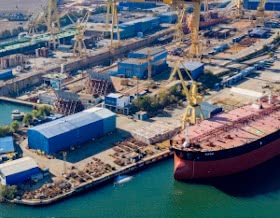
in particular of the dry docks managed by the
Basins, which constitute a shared asset for the entire supply chain.
The dedicated area occupies about 112 thousand square meters and records a
high saturation rate, with additional potential demand
who cannot find full satisfaction due to the limited
availability of space and operational capacity. A fact
significant is that 80% of the value of production is
built within the port areas, while the remaining 20% is
developed externally. According to the report, greater
availability of space would make it possible to internalise a
significant share of these activities.
The document also highlights the challenges facing the sector
face. While it shows economic and
growth prospects, on the other hand, critical issues emerge on the
human capital front. Companies report a growing
difficulty in finding qualified personnel, especially
in technical and craft professions. At the same time
The demand for figures capable of integrating skills is increasing
technical and managerial developments, while technological evolution introduces
new requirements related to electronics, automation, home automation and systems
advanced on-board vehicles.
The issue of the
generational turnover: almost 60% of direct operational employees
is between 41 and 60 years old, highlighting the need to strengthen
the connection between companies, the training system and institutions to
ensure the transmission of skills.
- Via Raffaele Paolucci 17r/19r - 16129 Genoa - ITALY
phone: +39.010.2462122, fax: +39.010.2516768, e-mail
VAT number: 03532950106
Press Reg.: nr 33/96 Genoa Court
Editor in chief: Bruno Bellio No part may be reproduced without the express permission of the publisher







 The Ports of Genoa strengthen their presence in one of the sectors
most strategic industrial sectors. The System Authority
Port of the Western Ligurian Sea, Confindustria Genoa and the Union
Savona industrialists presented the first report
of the Socio-economic Observatory "Enterprises, Work, Value",
created with the aim of continuously monitoring the evolution of the
shipbuilding and ship and nautical repairs in ports
of Genoa and Savona-Vado Ligure. The initiative, formalized
through a memorandum of understanding between the three subjects, aims to
build a stable information base to support decisions
industrial and infrastructural technologies, combining economic data,
of the supply chain and direct surveys on companies.
The Ports of Genoa strengthen their presence in one of the sectors
most strategic industrial sectors. The System Authority
Port of the Western Ligurian Sea, Confindustria Genoa and the Union
Savona industrialists presented the first report
of the Socio-economic Observatory "Enterprises, Work, Value",
created with the aim of continuously monitoring the evolution of the
shipbuilding and ship and nautical repairs in ports
of Genoa and Savona-Vado Ligure. The initiative, formalized
through a memorandum of understanding between the three subjects, aims to
build a stable information base to support decisions
industrial and infrastructural technologies, combining economic data,
of the supply chain and direct surveys on companies.









 - Via Raffaele Paolucci 17r/19r - 16129 Genoa - ITALY


