
Interferry has expressed strong concern about the current state
of the negotiations on the ETS, the Emissions Trading System
of the EU, as - explained the international association that
represents the shipping companies that operate ferries - not
the persistent regulatory imbalance that penalizes
unjustly maritime transport. An imbalance -
highlighted Interferry - which sees the Member States on the one hand
push for a further postponement of the EU ETS2, the new system
European Emissions Trading Scheme, which extends the market for the
to the trucking and buildings sectors, and on the other hand
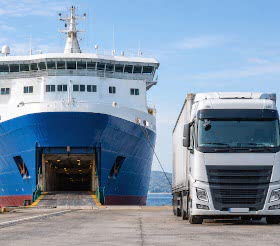
ferry operators who are facing a
constant competitive disadvantage compared to a
road transport which is characterised by higher emissions
high.
"The revision of the ETS system - observed Johan Roos,
Interferry's Director of Regulatory Affairs - addresses many
points, in particular the use of funds raised for the
decarbonisation of maritime transport. However, allowing
residential heating companies to confer an advantage
undeserved commercial transport of goods by road compared to the
maritime transport is unacceptable. The burdens and challenges
of decarbonisation - Roos underlined - cannot be
supported by individual sectors, and all transport sectors
must be treated equally. To restore fairness,
EU policymakers need to make more
detailed the scope of ETS2, separating
road transport from emissions from buildings to ensure a
fair competition or, alternatively, apply carbon costs
in a uniform way to all sectors. Any other solution does not
would only consolidate the current unfair disadvantage
without bringing any benefit to the climate or
to the environment".
Interferry recalled that from 2024 commercial ships
passengers and cargo units of 5,000 gross tonnage or more
tonnes calling at European ports are subject to the EU
ETS, and that compliance costs currently amount to
about 250 euros per ton of diesel. For European operators
of ro-pax (passenger and freight) and ro-ro (only
- highlighted the association - the annual cost is
estimated at about one billion euros. "Despite this burden
is designed to incentivise the transition to more
- denounced Interferry - it weighs on a market
heavily biased. Ferry routes often compete
directly by road transport; however, the latter - a
sector that generates significantly higher emissions -
continues to benefit from the EU ETS2 postponements. Already
postponed from 2027 to 2028, ETS2 is now subject to new
pressure from several EU Member States, calling for
a further postponement. This eventuality - noted
The association - derives from the inclusion of road transport
in the same regulatory category as for the sector
of construction. As a result, political concerns -
particularly felt in the Member States of Eastern Europe and
- regarding the costs of domestic heating during
winter are effectively protecting road freight transport
emissions trading scheme. For
However, the resulting market distortion is
real and harmful, regardless of political motivations
underneath".
"The highest and most distributed costs
caused by the EU ETS - Interferry denounced again -
are partly leading to a shift in the demand for
transport away from ferry services. At the same time, such
disparities make it extremely difficult to pass on costs
on customers. Ultimately, this translates into
in a lack of the investments necessary for rapid
decarbonization of the sector".
Reiterating that regulatory simplification for a sector that is not
must be at the expense of fair competition and that
road transport cannot continue to be exempt from
effective taxation of greenhouse gases', Interferry has
also insisted that all revenues from the
ETS compliance for the maritime sector 'must
be rigorously constrained and reinvested in decarbonisation
of the maritime sector itself: through marine fuels
sustainable products in the EU, clean technologies and infrastructure
recharging on the ground".














 - Via Raffaele Paolucci 17r/19r - 16129 Genoa - ITALY


