
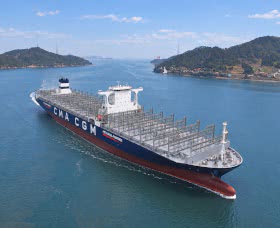
According to the latest update of the Dual-Fuel Fleet Dashboard
published by the World Shipping Council (WSC), the issue of
container ships and dual-fuel car carriers in service
in the world it has exceeded 500, reaching 503 units.
The association, which represents companies operating services
liners, highlighted that this is a goal that
reflects a massive acceleration in investment by
of shipowners, which have reached a total of over 200 billion
of dollars between ships already delivered and orders in the portfolio.
In particular, the data updated to September 2026 photograph
a sector in profound evolution. Dual-fuel ships operating are
503, with a jump of +41% compared to the 358 units surveyed
in the same period of the previous year. In addition, there are 849
dual-fuel ships currently on order, bringing the grand total
of the fleet in the water and under construction to 1,352 units. These
ships are designed to be powered by both traditional
marine fuels from both low- and zero-grade alternative propellants
emissions such as green methanol or LNG/biomethane.
Market preference for dual-fuel technology appears
net value, particularly in the reference segments of the shipping sector of
line. The report points out that in the container ship sector, the
Units capable of exploiting alternative fuels
They account for 65% of total orders based on deadweight.
The gap is even more marked between ships
car-carriers, where as many as 97% of new orders concern ships with
dual fuel. By way of comparison, in the rest of the fleet
global merchant market, the percentage stops at 23%.
WSC pointed out that despite financial commitments
Industry records for the decarbonisation of transport
maritime level, however, strong elements of uncertainty persist.
Global indecision on greenhouse gas (GHG) regulations
discussed at the International Maritime Organization (IMO)
stimulated, in parallel with green growth, also an increase in
of orders for ships with traditional engines compared to a
year ago. In this regard, highlighting that "the ships ordered
today they will remain operational for decades", the president and CEO
of the World Shipping Council, Joe Kramek, stressed that "the
shipping companies and fuel manufacturers need
of certainty to make investments that can shape the
fleet of the future and its supply chain".
The World Shipping Council has therefore reiterated the need
to adopt a global greenhouse gas measure in line with the
IMO 2023 strategy, being an international regulatory framework
considered essential not only to bridge the gap
between fossil fuels and renewable fuels, but also for
avoid the risk of regional regulatory fragmentation that
would end up increasing the costs and complexity of the
"Any delay," Kramek noted,
increases uncertainty, making the transition more difficult and
costly for the global economy".

















 - Via Raffaele Paolucci 17r/19r - 16129 Genoa - ITALY


