
In recent days, Mitsubishi Heavy Industries announced a
a plan that provides for investments of 100 billion yen (600 billion yen)
million dollars) to expand its capacity in the
Japan shipbuilding segment. October 2
the company has signed an agreement with the Municipality of Shimonoseki,
in Yamaguchi Prefecture, to acquire an area intended for the
industrial development on the artificial island of Choshu Dejima. The
Japanese group intends to use it to expand capacity
of the subsidiary Mitsubishi Shipbuilding. According to the
MHI announced up to 40 billion yen of investment
may be covered by public contributions, as part of the
measures promoted by the Japanese government to strengthen the capacity of the Japanese government
production in the shipbuilding sector. The
project, in fact, has been recognized as an intervention
useful for consolidating the country's shipbuilding infrastructure and for
guarantee the availability of ships in the medium and long term.
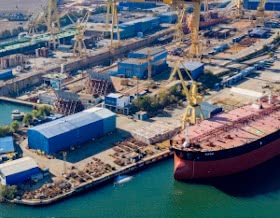
The program provides for the transfer to the new site of some
functions currently carried out by the Enoura shipbuilding plant,
belonging to the Shimonoseki Shipyard & Machinery Works complex
of MHI, and the construction of a new plant for the production of
hull blocks.
MHI explained that the plan aims to enhance the capabilities of the
production of Mitsubishi Shipbuilding, improving the organization of
activities and setting up an industrial structure in
able to support future growth in orders. The goal is
to strengthen the Group's competitiveness in a context in the
what the ability to build new ships assumes
growing importance, both for the prospects of transport
maritime world and for the needs of economic security.
In addition, the investment is part of industrial policy
aimed at strengthening the national construction supply chain
considered strategic for a highly dependent economy
maritime transport.
On September 11, Mitsubishi Shipbuilding obtained from the
Japanese Ministry of Land, Infrastructure,
Transport and Tourism the approval of its plan for
ensure the stable supply of critical products, with particular reference to
reference to hulls. Shimonoseki's design constitutes
therefore one of the initiatives supported under this
public strategy. The regulatory framework of reference is
the Economic Security Promotion Act, Japan's law on the
promoting economic security, which makes it possible to support the
production and availability of goods deemed essential for
national security. These include naval components such as
engines, propellers, sonar equipment and hulls. The measurement does not
concerns Mitsubishi exclusively. In the same round of
September, the ministry approved investment plans for other
Japanese manufacturers, including Oshima Shipbuilding, Kawasaki Heavy
Industries, Naikai Zosen and the Shin Kurushima Group. For Mitsubishi
Shipbuilding, the maximum potential public contribution envisaged is
precisely about 40 billion yen.




















 - Via Raffaele Paolucci 17r/19r - 16129 Genoa - ITALY


