Independent journal on economy and transport policy
10:59 GMT+2
PROGRESS AND TECHNOLOGY
The EU is investing in the green revolution of the seas
From ammonia to e-methanol, from electric ferries to CO2 capture: projects that redesign the future of European shipping have been financed
Bruxelles
October 22, 2026
On Monday, the European Commission announced a new
investment package under the Innovation Fund, the
main instrument financed by the revenues of the trading system
EU ETS emission allowances that will support
Innovative technologies for the decarbonisation of industry
European Union. A total of 77 projects were selected that
will benefit from a total of 3.4 billion euros.
Among the selected projects, a particularly
initiatives for the maritime sector, called upon to
achieve increasingly stringent reduction targets
and to rethink operating models, fuels and
infrastructure. The list also includes projects for the
port that the EU intends to turn into one of the main
platforms of the continental energy transition, promoting the
development of new fuels, the electrification of ships and the
creation of infrastructures dedicated to the capture and management of
carbon dioxide.
Among the most innovative initiatives are, among those
listed based in Italy, the Green Ammonia Fueled Fleet project
(GAFF), coordinated by Norway's Færder Tankers, which aims to
create the first European fleet of gas carriers equipped with engines
trifuels capable of using ammonia, liquefied petroleum gas and
marine diesel fuel. The ships will be used in the transport of ammonia
green areas and ship-to-ship bunkering on routes between India, the Gulf
of Mexico and Northern Europe. The project is therefore not limited to the
transport of green ammonia, but introduces an integrated system of
ship-to-ship bunkering on the main intercontinental routes.
The aim is to promote the spread of ammonia as a
alternative fuel for maritime transport, considered one of the
of the most promising candidates for low-speed navigation
emissions. The system is expected to handle up to one million
tons of green ammonia per year and avoid over 1.2 million
tons of CO2 in ten years.
RIPPLE, a coordinated project
by Denmark's Ammonia Carriers, which plans to retrofit four
Large ammonia transport vessels with dual fuel engines
capable of using the same ammonia transported as fuel
on board. The project represents one of the first European cases of
commercial application of this technology on a large scale, and
could accelerate the emergence of a supply network
in European ports. The initiative aims to demonstrate that
ships can dramatically reduce emissions without changing the
logistical function.
Another strategic strand concerns synthetic methanol, which is now
considered one of the most mature alternative fuels for
maritime transport. The L'Ardoise project, coordinated by the
MGH Energy, will build a plant capable of
produce 40 thousand tons of e-methanol every year for the
and 70 thousand tons of e-kerosene for aviation.
Similarly, Musel GreenMet, coordinated by the Hymet Musel of the group
HyFive, will be developed in the Spanish port of El Musel
an industrial platform for the production of e-methanol and
bio-methanol for the maritime, aviation and
chemical. The project exploits existing port infrastructures and the
Hydrogen Valley of Asturias.
Also on the alternative fuels front is
Victoria, a project based in Spain and coordinated by the German
Icodos, which will produce e-methanol using biogenic CO2
from a wastewater treatment plant in
Seville. The project aims to demonstrate how even widespread sources of
carbon dioxide can be exploited in the production of
sustainable fuels for maritime transport.
Alongside new fuels, the Innovation Fund supports electrification
of navigation. The FIN-SWE-EC project, coordinated by the
Finnish company Finnlines of the Neapolitan group Grimaldi,
will involve the two modern ro-pax ships Finnsirius and
Finncanopus engaged in connections between Finland and
Sweden, which will be equipped with storage systems of about 30
MWh per ferry. The expected savings are about 36,000
tons of CO2 per year. The initiative aims to become
a model for the electrification of Europe's Motorways of the Sea.
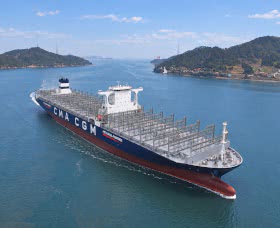
The Seatron project, based in
Germany and coordinated by the Danish group A.P. Møller-Mærsk,
which involves the transformation of a 3,500 TEU container ship into a
A fully electric ship. The heart of the project will be
replaceable modular battery containers and
high-power systems for charging during stops in the
port terminals.
The focus is also on existing fleets. The
RETRO-EMT project, coordinated by Holland Maas of the Netherlands
Scheepvaart Beheer VII, will demonstrate how the ships already
operational can be decarbonised through a combination of
CO2 capture on board, wind-assisted propulsion,
hydrodynamic optimizations and energy efficiency. The reduction
of estimated fuel consumption is over 26%.
The Spanish CATalonia REcycled Fuels (CATREF) project,
coordinated by the Irish XFuel Ltd. (owned by the Japanese
NYK), will transform marine oily waste into Marine Gas Oil
(MGO) compliant with ISO 8217 standards used by ships. The
model has been designed to be replicated close to the
major European ports.
On the infrastructural side, the Italian project stands out
Ravenna CCS Phase 2, coordinated by the Italian ENI, which will carry out
one of the largest European hubs for the reception, transport
and the permanent storage of CO2. The platform will be in
able to receive liquefied carbon dioxide by ship, rail and
transforming Ravenna into a strategic junction of the future
European carbon logistics.
A complementary model is
represented by ASTOR, coordinated by Norway's Aker BP, which
will develop an innovative system of
direct transfer of CO2 from ships to storage sites
subsea platforms, eliminating the need for offshore platforms
and opening a new frontier in maritime management
of industrial emissions.
The Phantom project, coordinated by Spain's Hydrogen Onsite and
located in the port of Rotterdam, will develop a
to convert ammonia into hydrogen using a
innovative cracking system.
OffshoreCharge, a project coordinated by the
Stillstrom of the Danish group A.P. Møller-Mærsk and
to integrate offshore renewable energy with the
maritime mobility. The technology will allow ships
used in wind farms to recharge the batteries
directly at sea, reducing operating costs and emissions, and
increasing the efficiency of logistics related to offshore wind.
- Via Raffaele Paolucci 17r/19r - 16129 Genoa - ITALY
phone: +39.010.2462122, fax: +39.010.2516768, e-mail
VAT number: 03532950106
Press Reg.: nr 33/96 Genoa Court
Editor in chief: Bruno Bellio No part may be reproduced without the express permission of the publisher






 On Monday, the European Commission announced a new
investment package under the Innovation Fund, the
main instrument financed by the revenues of the trading system
EU ETS emission allowances that will support
Innovative technologies for the decarbonisation of industry
European Union. A total of 77 projects were selected that
will benefit from a total of 3.4 billion euros.
Among the selected projects, a particularly
initiatives for the maritime sector, called upon to
achieve increasingly stringent reduction targets
and to rethink operating models, fuels and
infrastructure. The list also includes projects for the
port that the EU intends to turn into one of the main
platforms of the continental energy transition, promoting the
development of new fuels, the electrification of ships and the
creation of infrastructures dedicated to the capture and management of
carbon dioxide.







 - Via Raffaele Paolucci 17r/19r - 16129 Genoa - ITALY


