Independent journal on economy and transport policy
00:42 GMT+1
This page has been automatically translated by Original news
INFRASTRUCTURE
European corridors, Italy to the test of 2030
The national infrastructure is largely compliant, but the timing and financing of key works remain uncertain
Bruxelles
October 1, 2026
Yesterday, the European Commission's Directorate General for Move
The first edition of the work plans of the corridors of
transport of the TEN-T trans-European transport network. They are
the first drafted after the TEN-T Regulation No. 1679 of 2024 which
defines the new European Union guidelines for the development of
of the TEN-T network and are also the only ones that will be released before the
2030 deadline, when the core network (Core) will have to
be completed.
Four of the documents, which reflect the views of the
corridor coordinators and not the official position of the
concerning Italy and relate to the corridors
Scandinavian-Mediterranean, Mediterranean, Baltic-Adriatic and
Rhine-Alpes/North Sea-Rhine-Mediterranean. From the reading of the plans
A twofold picture emerges: the basic infrastructure is in good condition
compliant, but the major projects that should close the knots
Structural structures arrive late or with incomplete funding.
The most delicate case is that of the Brenner. The
Base Tunnel is expected to enter into service at the end of 2032, but the
Piano warns that project risks could lengthen the timeframe.
What is more worrying, however, are the accesses. On the
on the Italian side, some batches are proceeding, others are reaching 2035, and
three routes between Bolzano, Trento and Verona are classified as high
risk of delay. In the north, in Germany, the access line is not
expected before 2040. Coordinator Pat Cox uses words
unusually direct. When the tunnel is ready, he writes
In essence, the line will already have structural problems of
capacity, and those problems are predictable. He therefore asks to
reassess commitments on four-track upgrading before
is late. The risk is to have a railway tunnel
brand new and a line that does not support the trains that should make
pass.
In the South, the picture is different, but uncertainty is the
itself. The Salerno-Reggio Calabria high-speed line and the
stable connection on the Strait of Messina appear among the
projects with a high risk of missing deadlines. The plan describes
the bridge over the Strait of Messina as a "proposed" project,
with a date indicated at the end of 2033. The South is also the
part of the country where delays on one of the requirements accumulate
"newer" ones, that of electric charging that
is judged inadequate.
As for the Turin-Lyon cross-border tunnel, worth 16.2 billion
of euros, completion is indicated for 2033 and the plan of the
Mediterranean Corridor insists on synchronization, because
A work ready on one side and not on the other is of little use: the
also by 2033, is designed to align with the
tunnels, while on the French side the access links have no
Another confirmed date.
The situation of the Rhine-Alpes/Sea corridor
North-Rhine-Mediterranean is less critical. The Third Pass of the
Giovi is given "in the process of completion" and of the
About 87 kilometers of excavation remain to be completed, 1.3 between the end of the excavation
2026 and early 2027. However, the dates differ between the documents.
The Rhine-Alpes/North Sea-Rhine-Mediterranean plan indicates the
"presumable" completion of the Tortona-Genoa section
to 2028, while the Mediterranean plan brings the deadline to 2032 for
the entire package with the Genoa junction.
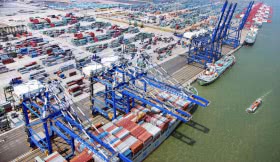
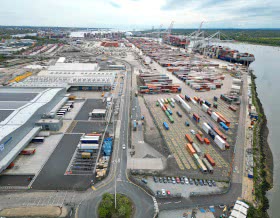
As for the criticalities of the connections of Italian ports
with the trans-European network, the railway link of the port of
Ravenna is indicated among the projects with risk of postponement,
while the ports of Bari, Cagliari, Civitavecchia, Gioia Tauro,
Naples, Palermo-Termini Imerese and Taranto are destined to remain
non-compliant on the ability to move units
and/or the presence of a multimodal terminal open to
all operators.
Then there is the question of 740-meter trains, the standard
to make rail freight transport competitive.
According to the data of the plans, which refer to the lists of projects of
end of 2025, on the Mediterranean corridor, today in Italy can
circulate without restrictions only on the Milan-Verona route. Elsewhere there are
Interventions are planned, but with different times. In Novara, two terminals
cannot accommodate convoys of this length and are not
projects are planned before 2030. Even the large urban nodes
fatigue. Milan, Florence and Rome are indicated among the bottlenecks of
most important capabilities, and the Milan East Gate Hub,
scheduled right on the deadline, has not yet started the
authorizations.
- Via Raffaele Paolucci 17r/19r - 16129 Genoa - ITALY
phone: +39.010.2462122, fax: +39.010.2516768, e-mail
VAT number: 03532950106
Press Reg.: nr 33/96 Genoa Court
Editor in chief: Bruno Bellio No part may be reproduced without the express permission of the publisher







 Yesterday, the European Commission's Directorate General for Move
The first edition of the work plans of the corridors of
transport of the TEN-T trans-European transport network. They are
the first drafted after the TEN-T Regulation No. 1679 of 2024 which
defines the new European Union guidelines for the development of
of the TEN-T network and are also the only ones that will be released before the
2030 deadline, when the core network (Core) will have to
be completed.
Yesterday, the European Commission's Directorate General for Move
The first edition of the work plans of the corridors of
transport of the TEN-T trans-European transport network. They are
the first drafted after the TEN-T Regulation No. 1679 of 2024 which
defines the new European Union guidelines for the development of
of the TEN-T network and are also the only ones that will be released before the
2030 deadline, when the core network (Core) will have to
be completed.











 - Via Raffaele Paolucci 17r/19r - 16129 Genoa - ITALY


