
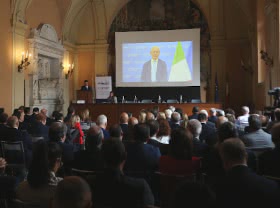
Today the Secretary General of the International Maritime
Organization, Arsenio Dominguez, updated the board
on the situation affecting ships and
seafarers still stranded in the Strait of Hormuz region.
"You will remember - said Dominguez - that, following
of the outcome of the thirty-sixth extraordinary session of the
Council, I have started work with the Member States concerned and the Member States concerned.
industry representatives for the development of a
evacuation and, at the end of June, we were able to give
start of evacuation to bring ships and seafarers to safety
stranded in the Strait of Hormuz." Dominguez announced that
'During the period of operation of the
evacuation, 136 ships with a total of 2,900 seafarers were evacuated.
successfully evacuated via two alternative routes, as
the current Traffic Separation Scheme could not be used to
due to safety risks, in particular due to the presence of
sea mines. As you know - he added referring to the
resurgence of the crisis between the US and Iran and the new attacks on the
ships transiting the region - this process has been
subsequently suspended, as it was no longer possible
ensure the safety of ships and seafarers'.
"About 6,000 seafarers - underlined the IMO Secretary General -
remain trapped in the region. I keep looking for guarantees
so that ships can evacuate the Strait of Hormuz
using one of the alternative routes provided, without the risk
of attack threats. I remain confident that the evacuation plan
can be resumed and the Secretariat continues to work with
stakeholders to this end, so that the thousands of
of seafarers involved can return to safety and the normal
commercial conditions can begin to be restored in the
area".
With regard to the interested parties, Dominguez thanked
nations in the region and industry partners for their
support, and in particular the Sultanate of Oman for its
cooperation with the IMO in establishing the framework for
evacuation.
Dominguez also focused on the persistent cost
high level of marine insurance in the region as other
cause for great concern, which further aggravates the
situation for shipowners and operators. "This - he noted
- indicates that market prices are not adjusting to the
improvement of conditions. Governments that have influence on the
insurance and reinsurance markets - he urged - have a role to play
to be carried out in dialogue with insurance companies to
ensure that the rewards reflect the current reality, rather than
continue to reflect the peak of the crisis. This does not
contributes to the reduction of freight transport costs and affects
in particular the countries of those regions that have already suffered
the consequences of these conflicts and require assistance and
of the recovery of maritime trade".
















 - Via Raffaele Paolucci 17r/19r - 16129 Genoa - ITALY


