
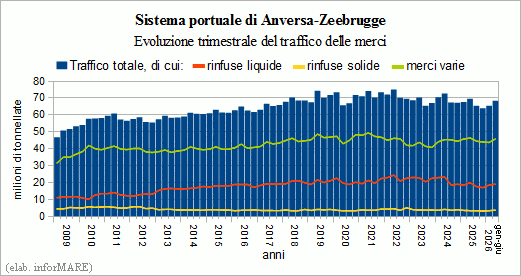
In the second quarter of this year, thanks to the reversal of
trend in dry bulk traffic and the
rolling stock traffic, the decline in rolling stock has been further mitigated
of goods handled in the port of Antwerp-Bruges during the period
amounted to 68.4 million tonnes, with a decrease of
-2% approximately on the April-June quarter of 2025. In particular, after
five quarters of decline, dry bulk traffic
recorded a growth of +8% rising to 3.6 million tons.
The increase in rolling stock also continued, which had
totalled 5.6 million tonnes (+5%). The largest volume of
traffic, that of containerized cargo, has suffered a
reduction of -2% having fallen to 37.9 million tons with a
container handling which was equal to approximately 3.4
million TEUs (-2%). Liquid bulk cargo with
19.0 million tonnes (-4%) and conventional goods with 2.2 million tonnes
million tons (-15%). The handling of new cars, equal to
to 900 thousand vehicles, it grew by +5%.
The Port Authority of Antwerp-Bruges announced that
In the first half of 2026, the Belgian port of call
handled a total of 133.9 million tons of goods,
with a drop of -2.4% on the first half of last year. In the solo
container industry traffic was 74.2 million
tons (-3.6%) with a container handling of 6.8
million TEUs (-1.5%). The port authority specified that the
Full container exports decreased by -5.7% reflecting
the weakening of exports by Western European economies,
while the handling of empty containers has increased by
+13.7% mainly due to the strong increase (+31%)
of the export of empty containers. The Port Authority has
specified that this was compounded by the impact of the
strike of four days in March which, according to estimates,
led to a reduction in traffic of 100 thousand TEUs, as well as
the impact of the oil spill in the
Deurganck which led to the temporary interruption of traffic
in the area and which resulted in a further loss of traffic
estimated at 85 thousand TEUs.
The half-yearly decrease in goods is more pronounced
amounted to 4.2 million tonnes (-11.7%), with
a decrease of -6.1% in imported data and a reduction in
-19.6% of those in export, while rolling stock, with 11.0
million tons, grew by +5.9% driven by both
imports (+4.6%) and exports (+6.9%). In the
of liquid bulk cargo was handled 37.5 million
tonnes (-1.9%) and in dry bulk 6.9 million tonnes
tons (+2.3%), with a +3.9% in exports of dry bulk and a
-0.3% of imports. The handling of new vehicles is
was 1.8 million units (+7.2%).






















 - Via Raffaele Paolucci 17r/19r - 16129 Genoa - ITALY


