Independent journal on economy and transport policy
14:14 GMT+2
This page has been automatically translated by Original news
CRUISES
Transport & Environment urges the introduction of national taxes on cruises and further EU measures to reduce their impact
The proposal is of an amount of approximately 15 euro per passenger/ship
Bruxelles
July 3, 2026
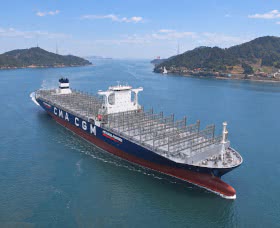
Transport & Environment, the organization that promotes the decarbonization of the European system of transport, has again examined the industry of the cruises, not dwelling this time on the emissions produced from the ships but on the fiscal gap between the overnight stays on a cruise ship and those in the hotel. In a specific study, T&E notes that in Europe a night on a cruise ship is taxed 40% less than one night in a hotel, and this - it highlights the relationship - despite the high environmental costs and the contribution to the overcrowding tourism produced by the cruises. For high-end cruises - the document highlights - the gap is even more marked: taxes represent 20% of the price of an overnight stay in a luxury hotel, but less than 3% of the price of a ticket for a luxury cruise and, therefore, those who can afford the most expensive holidays contribute much less, in proportion, to public tax. According to T&E, it would be necessary therefore a tax reform to ensure that the cruise ships pay a share of taxes considered fairer.
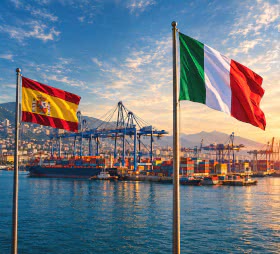
The analysis examines the taxes on hotels from 100 euros per night in France, Italy and Spain and compares them with similar price cruises. From the study it turns out that, on average, those staying in the hotel pay 23% of the price of overnight in taxes, while the passengers of the cruises pay only 12%. The study recalls that cruise ships are legally classified as passenger ships and therefore benefit from tax exemptions designed for commercial goods transport, i.e., in many cases, are not subject to corporate income tax and benefit from VAT exemptions and excise exemptions on ship carburetors. The document emphasizes that the one in force for the cruises is therefore a tax regime thought for an activity, that of the international transport of goods, that with the cruises has now very little to do, since a cruise is not a means to reach a destination and is itself the destination, chosen both for the ports of call as for the pools, restaurants and entertainment on board.
"We treat floating hotels - said Fanny Pointet, shipping manager of T&E, illustrating the study - as if they were essential marine infrastructure. Cruises are not a means of transport, but the destination itself, yet we grant them the same benefits of freight transport. To properly cut the ships from cruise would help the cities to face pollution and to counter the overtourism".
Regarding the comparison between the tourist traveling on a cruise ship and the one staying in the hotel, for the environmental impact the study refers to independent analyses of the International Council on Clean Transportation (ICCT) that show how a passenger of a cruise ship generates twice the CO2 emissions compared to a tourist flying towards the same destination and stays in a high-end hotel, and between two and four times more than the one who sleeps in the hotel.
The study notes that a substantial share of the negative externalities resulting from the emissions of greenhouse gases and atmospheric pollutants that are generated by cruise ships is not taken into account by national regulations. The document explains that in 2025 in the western basin of the Mediterranean, where 65% of the European crocieristi are concentrated, air pollution and the air emissions generated by the cruise ships have generated an estimated social cost between 557 million and 930 million euros and, if you also include the Atlantic routes of France, Spain and Italy, the figure rises up to a range between 792 million and 1.3 billion euros a year.
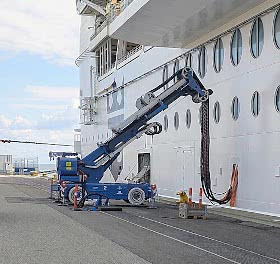
According to T&E, the introduction of a tax of 15 euros per passenger per harbour port of call would generate an annual jet of 335 million euros in Italy, France and Spain and these income could be reinvested in the national budgets and destined to the protection of the ecosystems in the coastal zones or used to finance green infrastructures like the systems onshore power to supply electricity from land to the ships while they are moored in the ports, also in consideration of the very slow transition of the A use of conventional fuel fossils that - specific the study - is destined to last as the ships from cruise have a very long life and remain in service for decades.
The study notes that the European regulations currently in force or in phase of implementation, including the obligation to supply electricity from land (OPS) provided by the European Regulation AFIR from 2030, the inclusion of marine transport in the ETS, the transition to sustainable fuels imposed by the European Regulation FuelEU Maritime, the new area of control of sulphur emissions in the Mediterranean, are judged steps in the right direction but still insufficient: the revenues generated by the ETS applied to the cruises - precise the study - cover, on average, only a third or half of the real climatic costs of the field, and for the air pollution there is still no equivalent tax at European level.
For T&E, the necessary tax reform to reduce the tax gap to the advantage of the cruises should be based on the introduction of a national tax on the passengers of the cruises, to be applied until the European regulatory framework (ETS, OPS mandatory, FuelEU objectives) will not be stringent enough to fully internalize the environmental costs of the sector. The recommendation is therefore the introduction of a fee of approximately 15 euros per passenger/calo, with the relative jet that should be destined to finance the installation of the OPS infrastructures of electricity supply in the ports and to the protection of the coastal and marine ecosystems, and should be accompanied by operating limits in the destinations most affected by the overcrowding.
The study recalls that in the world several jurisdictions have already introduced similar mechanisms, generally for two reasons: the reaction to overtourism (Spain, Greece, Croatia, Bahamas) or the ecological fragility of the territories (Island, Norway, Scotland). In these cases the amounts of the tax vary a lot: from the two euros of Lisbon or the Balearics up to the 30,5 dollars of Alaska, passing through Mexico (on gradual increase from 4,5 to 18,5 euros by 2028), Greece (5-20 euros in the peak months) and Barcelona, where today we are discussing to bring the surcharge up to 24 euros for the ships that stay less than 12 hours in dock.
Simulating the impact of a standard fee of 15 euros per passenger landed in France, Italy and Spain, T&E points out that this amount would generate approximately 145 million euros a year in Italy, 134 million in Spain and 55 million in France, figures far from symbolic, but still - precise the study - modest for the individual passenger if compared, for example, to the average cost of a wi-fi package on board equal to about 20 euros.
The specific document, moreover, that one of the most recurring arguments against these measures, that is the risk of removing tourists from the field of the cruises, does not find confirmation in the data: Barcelona, for example, has quadrupled its local tax on cruises in a decade recording in the same period an increase of +30% of the arrivals of crocieristi; Greece has seen an increase of +11% of visitors in only one year with the national tax fully in force and in the Caribbean, the two leading markets for crocieristico traffic volumes - Mexico and the Bahamas, which apply a fee per passenger of 20-26 euros - are precisely those with the highest taxes.
The study also refers to an analysis of the Scottish Government which focuses on a significant factor: the times of introduction of the tax, with taxes announced and applied within a few months (as in Amsterdam) that cause a temporary decline of the ports of call that then reassorts, and with taxes announced in advance (two years in Dubrovnik) that from the beginning have an almost null impact.
In addition to the introduction of a national tax, according to T&E would be necessary the elimination at European level of VAT exemptions for international cruises, the exclusion of cruise ships from excise exemptions on naval fuels in the revision of the directive on energy taxation, the introduction of a European obligation of minimum levels of environmental taxation for the sector, the strengthening of the objectives of the Regulation FuelEU Maritime, the extension of the obligation of the EU
- Via Raffaele Paolucci 17r/19r - 16129 Genoa - ITALY
phone: +39.010.2462122, fax: +39.010.2516768, e-mail
VAT number: 03532950106
Press Reg.: nr 33/96 Genoa Court
Editor in chief: Bruno Bellio No part may be reproduced without the express permission of the publisher







 Transport & Environment, the organization that promotes the decarbonization of the European system of transport, has again examined the industry of the cruises, not dwelling this time on the emissions produced from the ships but on the fiscal gap between the overnight stays on a cruise ship and those in the hotel. In a specific study, T&E notes that in Europe a night on a cruise ship is taxed 40% less than one night in a hotel, and this - it highlights the relationship - despite the high environmental costs and the contribution to the overcrowding tourism produced by the cruises. For high-end cruises - the document highlights - the gap is even more marked: taxes represent 20% of the price of an overnight stay in a luxury hotel, but less than 3% of the price of a ticket for a luxury cruise and, therefore, those who can afford the most expensive holidays contribute much less, in proportion, to public tax. According to T&E, it would be necessary therefore a tax reform to ensure that the cruise ships pay a share of taxes considered fairer.









 - Via Raffaele Paolucci 17r/19r - 16129 Genoa - ITALY


