
Assarmatori's most decisive lunge in denouncing
the impact on some sectors of maritime transport
the application of the ETS to the sector
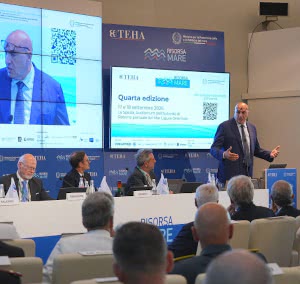
EU emissions was launched by the President
of the shipowners' association on the occasion of the mission to
Brussels meeting of the organisation's governing council held
Tuesday and Wednesday: "The effects of the tax
on emissions wanted by the European Union - denounced Stefano
Messina - are producing negative consequences on the most
maritime transport strategies comparable to those
major international crises, such as rising prices
of energy linked to the blockade of the Strait of Hormuz. The difference
- he underlined - is that Hormuz is a shock
while the ETS is a structural taxation,
which is intended to have a permanent impact on competitiveness and
sustainability of connections with the islands, of the motorways
of the Sea and the transhipment of containers".
"In recent months - recalled the president of
Assarmatori - we welcomed the inclusion of some
Priorities of national armament in European strategies
dedicated to the maritime sector. However, the decisive issue was and
their translation into concrete measures remains. In the case of the ETS,
unfair taxation because it is not selective as it is applied
horizontally, without considering the specificities of the
individual sectors, there is now a clear awareness of the
criticality of the current regulatory framework, but it remains
insufficient clarity on the corrective tools that will be
adopted. In this context - Messina specified - we look with
with particular attention to the future "European Strategy for Renewable Technologies"
islands", which is being developed under the guidance of the
executive vice president Raffaele Fitto, to whom we have
represented our priorities on maritime connections
with the islands. The imposition of a taxation on these services
disproportionate climate and which, moreover, does not return to the
maritime sector in the form of investments with a view to a
real environmental sustainability puts its fragile
balance".
"The feeling," Messina concluded, "is that the
European technocracy remains inflexible with respect to the need for a
significant improvement of these policies. But we
We ask that the July review be courageous, to allow
to our industrial sector to remain competitive in a
particularly difficult global scenario".















 - Via Raffaele Paolucci 17r/19r - 16129 Genoa - ITALY


