Independent journal on economy and transport policy
22:16 GMT+2
This page has been automatically translated by Original news
LEGISLATION
The EU Council welcomes many of the requests made by the associations of the European maritime-portal cluster
However, the text necessarily postpones the adoption of concrete measures to future legislative initiatives
Lussemburgo
June 8, 2026
Today the Council of the European Union has adopted its conclusions on the EU's maritime industrial strategy that highlight the strategic importance of the marine manufacturing industry and the European maritime transport for competitiveness, resilience, economic security, readiness in the field of defence, prosperity and objectives of decarbonization of the Union. In the conclusions, Member States recognise the maritime sector as an cornerstone of the European industrial base and underline its essential role in safeguarding supply chains, supporting the clean transition and strengthening the technological leadership of the EU. They also recognise the different national, regional and local characteristics of manufacturing and shipbuilding across the EU and the different priorities of the Member States.
The conclusions incorporate many of the requests advanced in recent years by the main European maritime-port cluster organizations, primarily from SEA Europe, European Sea Ports Organisation (ESPO) and European Shipowners (ECSA). In particular, the first association, which represents European shipyards, for years underlines the need for strong European industrial policy, investment in the sector and measures to develop innovation and skills, as well as actions to seriously counter Asian competition and dumping practiced by the shipyards of the region.
In its conclusions, the Council notes that the European maritime manufacturing and navigation industries are facing increasing challenges, including the intensification of global competition, geopolitical tensions, strategic dependence on the production of third countries, the need to speed up decarbonization and the persistent shortage of labour and skills.
In the political declaration of the EU Council, "the strengthening of the EU's maritime manufacturing sector for the purposes of industrial sovereignty, resilience and technological leadership, while preserving an open, fair and competitive global market context," said the EU's economic policy strategy and unfair subsidies on the part of third countries which affect existing EU shipping industries, including inequalities in EU prices
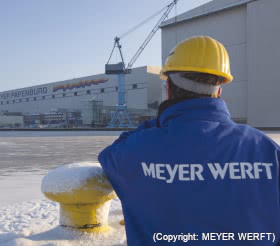
In relation to shipbuilding the document, among other things, "recognizes the importance of approaches focused on the modular construction, standardization and production in series to improve efficiency, as well as the importance of focusing on market segments of high value such as ships from cruise, ferries, military ships, support ships for offshore wind and conversion platforms, ships for laying cables, ships from research, dragons, from boats
The conclusions also support "the launch of an alliance for EU industrial maritime value chains" and encourage "its rapid establishment to promote industrial cooperation and identify strategic investment priorities, while ensuring strong involvement of industry and Member States, with a clear mandate and governance framework." Moreover, it is called "the development of national and regional marine clusters that bring together shipyards, equipment manufacturers, SMEs, research centers, universities, design studies, financial institutions and public authorities" and is supported "the realization of the initiative 'ships of the future', also through Horizon Europa". It is then called "to speed up the adoption in the shipyards of digital, clean and circular technologies, including technologies based on AI and detection, automation, robotics and intelligent maintenance solutions" and also called for "specific measures for small and medium-sized shipyards, in particular in cohesion regions, islands and peripheral areas, in order to support digital transformation, automation, clean chains, EU participation capacity".
The declaration also recognizes "the strategic importance of ferries, ro-pax ships and ships for short-range shipping for European connectivity, territorial cohesion, preparation for emergencies and military mobility, and calls for strengthening the European productive capacity in these segments".
As for the marine transport, priority question for the shipowning association ECSA, the declaration "recognizes that the European shipowners are fundamental factors driving the demand in the entire marine industrial ecosystem and that it is important to maintain a European fleet competitive and attractive, also flying flags of the EU, to guarantee economic security, resilience of the supply chains and the overall competitiveness, and takes note of the crucial role played from the field of the ship to bulk EU
It is also reaffirmed "the importance of maintaining a stable and foreseeable framework on State aid for maritime transport, as a fundamental element in safeguarding the overall competitiveness of European maritime transport" and emphasises "the importance of ensuring equal conditions at world level and preserving the overall competitiveness of European maritime transport".
About the European norms on the decarbonization of the shipping, the declaration "underlines that, in case of adoption of global measures in line with the objectives of the strategy of the IMO of 2023 on the gases to effect greenhouse, will be necessary adaptations of the Regulation FuelEU Maritime, of the regulation MRV and of the EU ETS for the marine transport in order to effectively avoid double financial payments and administrative charges and to ensure an international implementation and consistency with the In addition, "encourages the simplification, where appropriate, of the monitoring, communication and verification frameworks within the EU ETS for the marine transport and FuelEU Maritime".
Responding also to the concerns manifested by the harbour association ESPO about the possible hijacking of traffics towards extra ports- EU caused by European standards on decarbonization, it is also evidenced "the risk of distortions of competition, including the deviation of traffic towards ports of third countries, and the need for appropriate measures to attenuate such risk, taking into account the exposure of the marine sector to international competition and its central role in the global logistic chains".
In addition, "the need for predictable transition frameworks for the dissemination of alternative technologies and fuels is underlined, taking into account their availability and development of infrastructures, in order to avoid relocation of CO2 emissions and the disturbances of connectivity" and "recognizes that the costs of transition can affect connectivity and prices, especially for the economies of islands, the insular and remote Member States.
Regarding the use of funds generated by the EU ETS emissions exchange system for the marine sector, the importance of using the EU ETS income for climate-related purposes is "recognized by the Member States, in accordance with national priorities, to support the decarbonization of the marine sector throughout the value chain, including shipyards, navigation fuels, suppliers of modernization technologies, manufacturers. It is also encouraged "the Member States to use the proceeds generated by the inclusion of the marine transport in the EU ETS to support the energy transition of the field, including the renewal of the fleets, the green modernizations, the services of insulating marine transport, the alternative fuels and the harbour energy infrastructures".
The statement also calls for "more efforts to improve access to the market for European maritime transport services, also through the effective use of EU trade agreements and adequate support for bilateral maritime agreements compatible with Union law".
However, if the conclusions adopted by the EU Council respond to the main demands of the European maritime-port cluster, the text remains essentially a declaration of political address that recognizes the problems raised by industry and makes its own objectives, but necessarily postpones to future legislative initiatives concrete measures to resolve them.
- Via Raffaele Paolucci 17r/19r - 16129 Genoa - ITALY
phone: +39.010.2462122, fax: +39.010.2516768, e-mail
VAT number: 03532950106
Press Reg.: nr 33/96 Genoa Court
Editor in chief: Bruno Bellio No part may be reproduced without the express permission of the publisher







 Today the Council of the European Union has adopted its conclusions on the EU's maritime industrial strategy that highlight the strategic importance of the marine manufacturing industry and the European maritime transport for competitiveness, resilience, economic security, readiness in the field of defence, prosperity and objectives of decarbonization of the Union. In the conclusions, Member States recognise the maritime sector as an cornerstone of the European industrial base and underline its essential role in safeguarding supply chains, supporting the clean transition and strengthening the technological leadership of the EU. They also recognise the different national, regional and local characteristics of manufacturing and shipbuilding across the EU and the different priorities of the Member States.








 - Via Raffaele Paolucci 17r/19r - 16129 Genoa - ITALY


