Independent journal on economy and transport policy
02:15 GMT+2
This page has been automatically translated by Original news
PORTS
European ports, sustainability enters the implementation phase
From policies to results: the ESPO report photographs progress, declines and priorities in the sector
Bruxelles
October 8, 2026
The path is indicated. Now we must continue in that
direction. This is the summary of the new environmental report
EcoPortsinSights 2026, presented today by the European Sea Ports
Organisation (ESPO), which is one of the pillars of the initiative
EcoPorts and photographs the state of the environment and sustainability
in the European port sector. The new analysis is based on data from
73 ports from 17 European countries, collected through EcoPorts
Self-Diagnosis Method (SDM), the tool with which the authorities
assess their environmental management system and
prepare for PERS (Port Environmental Review) certification
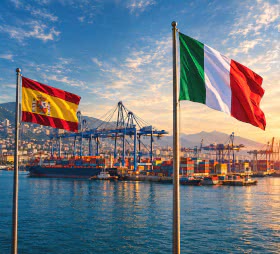
System). Spain is the most represented country (18
ports, 24.7%), followed by Germany (11) and, on an equal footing, the Netherlands and
United Kingdom (seven each). Italy participates with only one port.
As the sample varies from year to year, the report calls for
Read the variations with caution.
The picture is of a sector with highly developed practices.
97% of ports have an environmental policy, 99% have defined
improvement objectives and 95% manage a
monitoring. 77% have at least one system certification
(ISO 14001, EMAS or PERS) and reporting
public environmental level reaches a new high of 85%.
However, the Environmental Management Index drops to 8.51 out of 10,
from the record of 8.67 in 2025. It is the first annual decline since
2020, but remains the third highest value in the historical series.
The report specifies that the change should be read in the light of the
change in sample composition (from 77 to 73 ports).
The document highlights that some areas remain to be strengthened,
starting from the environmental training of personnel who are
stuck at 60% (it was 64% in 2025) and is the only indicator
below the 2013 level. In addition, the documentation of the
responsibility of key personnel drops from 91% to 86%, and,
While 99% of ports have set targets, only 77% say that
quantitative differences: a gap that, according to the report, indicates the
Road to the next step.
The report also focuses on the activities of
monitoring, explaining that it is more widespread in the
related to energy, waste and carbon. In particular, the efficiency of
energy costs reach an all-time high of 90%, port waste
89%, those of ships 86% and the carbon footprint 85% (+37
points compared to 2013, the most marked growth in the long term
period). Waste recycling monitoring rises to 80%.
On the other hand, the quality of sediments decreased (75%), consumption
(70%) and marine ecosystems (53%). Monitoring the
Soil quality records the most annual decline
from 52% to 47%. The report highlights the importance of
not to neglect these areas, given the growing attention of the
European policy on water resilience, nature restoration and
soil protection.
Climate change leads the ranking of priorities
for the fifth year in a row, being indicated by 59 ports.
This is followed by air quality and energy efficiency. Noise
rises to fourth place and the relationship with the local community
he makes the greatest leap, from the seventh to the fifth. The development
port on the land side drops from fourth to sixth place, but - warns
the report - without this reducing its real importance.
On the climate front, 85% of ports have set their own target of
reduction of greenhouse gases (80% in 2025); 70% report difficulties
potentially linked to climate change, the value
since the indicator exists; 79% are
strengthening the resilience of existing infrastructure; 89%
Consider climate adaptation in new projects
infrastructural data, the highest figure in the series.
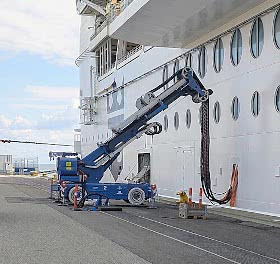
On the ship services front, the report notes that
Onshore Power Supply, the technology to provide electricity
from the shore network to ships, it is available in 60% (44 on
73) of ports (62% in 2025). Among these, 55% offer high
voltage, 75% low voltage and 98% have fixed installations and the
16% mobile installations. The report specifies that, "of the 44 ports
equipped with OPS, 38 indicate that ships use the system when
available, a percentage equal to about 86%". The report
warns that, however, the availability
infrastructure is not enough: environmental benefits are obtained
only if the ships really connect. The document recalls that only
from 2030, the European FuelEU Maritime Regulation will make
the use of OPS for container ships and passenger ships in
ports.
The most cited critical issues related to Onshore Power
supply concern the electricity grid: 54% report problems with
and 48% capacity. Only 37% believe that
the OPS represents a cost-effective opportunity
for its port reality.
As for the availability of fuel in ports
useful for the decarbonisation of maritime transport, the
report reports that liquefied natural gas bunkering is
available in 52% of ports. In addition, the activity is growing
on other fuels: biofuels from 28% to 41%,
ammonia from 16% to 20%, synthetic fuels from 13% to 18%,
while hydrogen remains stable at 42%. It is - specifies the
relationship - of projects under development and not of availability
operational.
With regard to the ports that "reward" the most
port fees differentiated for the most
"green" reach an all-time high: 70% of ports, from
61% in 2025. The most widely used criterion is the reduction of
greenhouse gases (67%), ahead of emissions into the atmosphere (63%). The
The report shows that, however, the economic incentive remains
generally modest compared to the overall cost of a stopover, and
it should be understood above all as an accompanying signal.
The message that emerges from the report is that the
of the adoption of policies and systems can be said to be largely
now it is a matter of demonstrating its effectiveness. They are needed
Quantifiable objectives, trained staff, environmental data
and power grids that can support
the electrification of docks and road transport. Also for
this ESPO is revising the SDM questionnaire, which should
halve the number of questions to make it easier to
while maintaining the information necessary for a
effective assessment.
In short: European ports have written the rules and built the
systems. Now they have to show that they work.
- Via Raffaele Paolucci 17r/19r - 16129 Genoa - ITALY
phone: +39.010.2462122, fax: +39.010.2516768, e-mail
VAT number: 03532950106
Press Reg.: nr 33/96 Genoa Court
Editor in chief: Bruno Bellio No part may be reproduced without the express permission of the publisher







 The path is indicated. Now we must continue in that
direction. This is the summary of the new environmental report
EcoPortsinSights 2026, presented today by the European Sea Ports
Organisation (ESPO), which is one of the pillars of the initiative
EcoPorts and photographs the state of the environment and sustainability
in the European port sector. The new analysis is based on data from
73 ports from 17 European countries, collected through EcoPorts
Self-Diagnosis Method (SDM), the tool with which the authorities
assess their environmental management system and
prepare for PERS (Port Environmental Review) certification
System). Spain is the most represented country (18
ports, 24.7%), followed by Germany (11) and, on an equal footing, the Netherlands and
United Kingdom (seven each). Italy participates with only one port.
As the sample varies from year to year, the report calls for
Read the variations with caution.
The path is indicated. Now we must continue in that
direction. This is the summary of the new environmental report
EcoPortsinSights 2026, presented today by the European Sea Ports
Organisation (ESPO), which is one of the pillars of the initiative
EcoPorts and photographs the state of the environment and sustainability
in the European port sector. The new analysis is based on data from
73 ports from 17 European countries, collected through EcoPorts
Self-Diagnosis Method (SDM), the tool with which the authorities
assess their environmental management system and
prepare for PERS (Port Environmental Review) certification
System). Spain is the most represented country (18
ports, 24.7%), followed by Germany (11) and, on an equal footing, the Netherlands and
United Kingdom (seven each). Italy participates with only one port.
As the sample varies from year to year, the report calls for
Read the variations with caution.










 - Via Raffaele Paolucci 17r/19r - 16129 Genoa - ITALY


