Independent journal on economy and transport policy
13:16 GMT+1
This page has been automatically translated by Original news
SHIPYARDS
Costs and times for the reconstruction of the four US Navy shipyards are rising exponentially
If in 2018 21 billion dollars and 20 years of work were planned, today the estimate is 200 billion and at least 50 years
Washington
September 25, 2026
It will take ten times more and twice and
estimated time in 2018 for the reconstruction of the
four public shipyards of the US Navy. It is the
Conclusion of the new Government Accountability Office report
(GAO), the oversight body of the US Congress, which
estimates for the Shipyard Infrastructure Optimization Program (SIOP) a
total cost of more than 200 billion dollars and a horizon
of more than 50 years. The program was initiated by the
Navy in 2018 to address the deteriorated condition of the four
Norfolk, Portsmouth, Puget Sound and Pearl public shipyards
Harbor, essential infrastructure for maintenance and
the modernization of the nuclear units of the US Navy, in particular
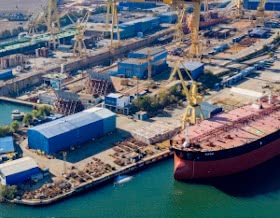
aircraft carriers and submarines. The project includes the
construction and modernisation of dry docks and quays,
the redevelopment of buildings and systems, the optimization of
production flows and the modernization of equipment and
of technologies.
In 2018, the U.S. Navy estimated that the SIOP would be
It cost at least $21 billion and would have required at least $20 billion
years, but already in 2023 the GAO had highlighted that the first
estimate did not include a number of significant costs and that the plan
relating to the Pearl Harbor shipyard had reached about 16
billion dollars, 162% more than estimated
then available.
The reconstruction of the four shipyards, therefore, could
become one of the longest and most expensive programs
never faced by the US Navy. The increase in costs
does not depend on a single cause. The GAO identifies a combination of
factors that have progressively changed the size, cost and
calendar of the program, which according to the latest forecast could
end after 2080. One of the main ones concerns the discovery of
Infrastructure conditions worse than initially
planned. The four construction sites are in fact characterized by
very old structures: some date back over 80 or even
120 years ago. The design and construction activities have
brought out further needs for intervention, including works of
safety, unscheduled repairs, plant upgrades and
work on service networks.
The increase in raw material prices has also had a
weight. The GAO recalls that, between January 2018 and July 2022, the prices
of certain materials and products used to a significant extent
in SIOP projects had increased significantly: +29% for the
concrete, +116% for steel and +148% for diesel. To these
factors add to the intrinsic complexity of the program.
It is not simply a matter of building new infrastructures on
free areas, but to transform four construction sites at the same time
which must continue to perform their industrial function. A
change in the design or timing of a work can
therefore have consequences on other interventions and on the same
site operation.
The size of the program is such that the US Navy has
decided to divide its implementation into three major time blocks.
The first, indicatively scheduled between 2026 and 2042, includes
interventions with greater design maturity, including
new dry docks, docks and some production facilities.
The second is expected to develop approximately between 2038 and 2038.
2079 and include the remaining production facilities and related
enabling interventions. The third, starting indicatively from 2074,
concerns logistics infrastructures, specialized workshops,
administrative structures and other capacities still to be
develop.
The picture, moreover, may not be complete, being
partial transparency of the information provided to Congress.
The US Navy, in fact, already transmits reports, communications and
briefing on different aspects of the SIOP, but there is no requirement to
produce a single, standardised framework for tracking
over time total costs, expenses already incurred, times,
progress and risks of the entire program. For the GAO,
This is a significant gap. Without a vision
The Congress could take decisions
on funding and priorities with information
incomplete, with a potential exposure of billions of dollars
public resources.
- Via Raffaele Paolucci 17r/19r - 16129 Genoa - ITALY
phone: +39.010.2462122, fax: +39.010.2516768, e-mail
VAT number: 03532950106
Press Reg.: nr 33/96 Genoa Court
Editor in chief: Bruno Bellio No part may be reproduced without the express permission of the publisher







 It will take ten times more and twice and
estimated time in 2018 for the reconstruction of the
four public shipyards of the US Navy. It is the
Conclusion of the new Government Accountability Office report
(GAO), the oversight body of the US Congress, which
estimates for the Shipyard Infrastructure Optimization Program (SIOP) a
total cost of more than 200 billion dollars and a horizon
of more than 50 years. The program was initiated by the
Navy in 2018 to address the deteriorated condition of the four
Norfolk, Portsmouth, Puget Sound and Pearl public shipyards
Harbor, essential infrastructure for maintenance and
the modernization of the nuclear units of the US Navy, in particular
aircraft carriers and submarines. The project includes the
construction and modernisation of dry docks and quays,
the redevelopment of buildings and systems, the optimization of
production flows and the modernization of equipment and
of technologies.
It will take ten times more and twice and
estimated time in 2018 for the reconstruction of the
four public shipyards of the US Navy. It is the
Conclusion of the new Government Accountability Office report
(GAO), the oversight body of the US Congress, which
estimates for the Shipyard Infrastructure Optimization Program (SIOP) a
total cost of more than 200 billion dollars and a horizon
of more than 50 years. The program was initiated by the
Navy in 2018 to address the deteriorated condition of the four
Norfolk, Portsmouth, Puget Sound and Pearl public shipyards
Harbor, essential infrastructure for maintenance and
the modernization of the nuclear units of the US Navy, in particular
aircraft carriers and submarines. The project includes the
construction and modernisation of dry docks and quays,
the redevelopment of buildings and systems, the optimization of
production flows and the modernization of equipment and
of technologies.










 - Via Raffaele Paolucci 17r/19r - 16129 Genoa - ITALY


