
Cavotec, a Swedish company that deals with
connection and electrification for the decarbonisation of ports,
mines and tunnels and industries, has signed a
exclusive distribution with the French company EVIAS to bring the
Automatic EV charging technology in ports
during their journey, including the recharging of port vehicles such as
tractors and other container handling units.
Under the agreement, Cavotec became the distributor and
Exclusive installer for the global port sector
of EIAS technologies, which is specialized in the development of
systems for the decarbonisation of road and urban transport. The
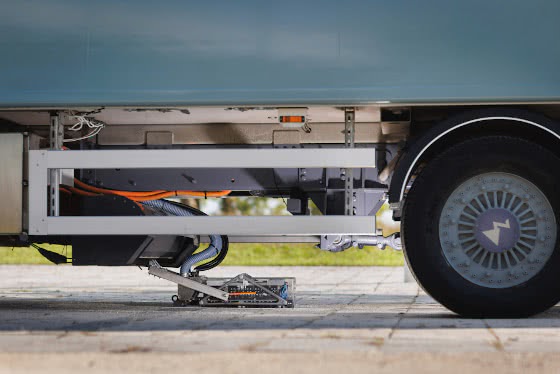
EVIAS technology is based on a charging system
Designed for intensive fleet use: one arm
Robotic vehicle locates and connects autonomously
a charging rail integrated into the road pavement,
allowing energy transfer both while driving and
during the waiting phases for the loading of containers. The design
is optimized for both safety - since it is
electrified only the rail segment located directly below
vehicle being charged - and for easy integration with
port infrastructure. The solution reduces the time it takes to
vehicle downtime related to charging, allowing you to
save space thanks to fewer parked vehicles.
Recalling that the Zero Emission Port Alliance (ZEPA), the initiative
for the acceleration of the use of electric port vehicles for the
container handling, predicts that between 2025 and 2035
Between 33,000 and 47,000 new electric vehicles will be ordered at
battery of this type, the managing director of Cavotec,
David Pagels, highlighted that the partnership with EVIAS allows
Swedish company "to extend our offer to the
horizontal transport and provide customers with an ever-increasing approach
more integrated with port electrification, ranging from
applications for ships and cranes up to terminal operations".
«Cavotec's global presence and its experience
over fifty years - added Olivier Besson, co-founder and
CEO of EVIAS - offer us an opportunity
to accelerate global uptake of charging
and to establish it as a new standard in electrification
with a speed that we could not have achieved
autonomously. In the meantime, we remain fully focused on the
development of our other strategic markets, including transport
public transport, road freight transport, autonomous vehicles and
the airport sector".



















 - Via Raffaele Paolucci 17r/19r - 16129 Genoa - ITALY


