Independent journal on economy and transport policy
22:34 GMT+2
SHIPPING
T&E, the revision of the ETS for shipping proposed by the EU Commission is a hesitant step forward
If the system is extended to small naval units - the association points out - however, exemptions and derogations risk nullifying its climate impact
Bruxelles
September 10, 2026
The proposal for the revision of the European Union Emissions Trading
System (EU ETS) put forward this summer by the European Commission
in the right direction, but it could be even more effective
(
of 17
July 2026). This, in summary, is the position on the proposal
reiterated today by Transport & Environment (T&E), which believes that
can be improved by anticipating the inclusion in the system of
smaller naval units, limiting the derogations for the
transhipment of containers in ports and allocating a share of the
ETS allowances to European e-fuels.
T&E, which is the leading environmental organization
to deal with sustainable mobility, highlighted
the success of the EU ETS, which since its launch in 2005 has been
has become the Union's main climate tool and has had a
success, helping to reduce emissions from the sector
industry, and maritime air transport, generating
at the same time, over 230 billion euros in auction revenue.
A system thanks to which - the association highlighted - the
EU ETS auctions, the mechanism through which a portion of the allowances
is sold directly by the authorities
companies subject to the system, since its launch have
generated more than €230 billion in revenue for Member States
and for the EU. In addition, emissions from sectors covered by the EU ETS -
T&E pointed out - have decreased by about 50% compared to the
levels, demonstrating the effectiveness of a rigorous
decreasing emission ceiling, combined with the
of a carbon price.
Therefore, the association believes that the post-2030 ETS should
preserve the fundamental principles that have decreed its
success, while adapting it to support the next phase of
industrial and energy transformation. This
means - for T&E - maintaining a maximum limit of emissions
robust and predictable, in line with the 2040 climate targets,
while ensuring stability and flexibility for
investments. This - the association specified -
also requires that revenues from the ETS be used in a way that
to accelerate investments in the
decarbonization, electrification and clean technologies.
Regarding the proposal for the revision of the ETS formulated
by the EU Commission for Maritime Transport, T&E considers that
one of the main innovations of the proposal, namely
the extension of the scope of the system to ships
between 400 and 5,000 gross tons, expected to
from 2031, is a positive first step, however
too slow and incomplete.
Recalling that the proposal provides for the inclusion of the most
small in the monitoring, reporting and verification (MRV) system since
2029 and in the ETS from 2031, with the exclusion of certain categories of
ships including ro-pax and passenger ships, cruise ships,
bulk carriers, container ships and reefer ships, the association has
complained that this would lead to exclusion from the
about one third of emissions from small ships,
including those of certain types of units that have
high electrification potential. T&E therefore proposes to
bring forward the inclusion in the MRV to 2028 and the inclusion in the ETS to 2029,
while extending the scope to all
categories of ships under 5,000 GRT. T&E also calls for measures
specific to facilitate the electrification of
smaller size.
Another important part of the Commission's proposal
concerns the risk of carbon leakage and elusive behaviour. For
To combat these phenomena, the Commission intends to include
additional non-EU ports among those considered relevant for the purposes of
of the ETS. The new criteria include ports within 300 miles
nautical from the EU with a transhipment share of at least 50%,
or ports within 150 nautical miles equipped with infrastructure
relevant for transshipment, such as docks and ship-to-shore cranes.
In parallel, however, the proposal introduces a new derogation
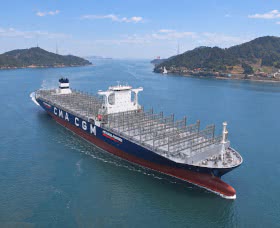
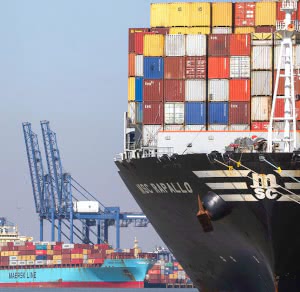
for container ships with a capacity of at least 10,000 TEUs
engaged in transhipment activities operating on
exceeding 300 nautical miles, a derogation that would allow
shipowners, until 31 December 2035, to return a number of
lower allowances than actually emissions
verified. According to T&E, this measure risks creating a
distortion of competition. The association specified that, in a
depending on the number of containers tranhipped, the derogation may
Leaving up to 2.1 million tonnes of CO2 out of the ETS
equivalent per year, equal to 6.4% of the emissions of the
container ships, with a possible loss of revenue for the Union
up to €2.3 billion in the extreme hypothesis in which
all containers are transhipment. T&E asks
therefore to reject not only this new derogation, but also
the extension until 2035 of the derogations already provided for the
ice-class ships, the outermost regions, small islands and
links between Cyprus and Greece. The extension of these exemptions,
According to the association, it would result in an estimated loss of revenue
in 3.5 billion euros in the period 2030-2035.
T&E's analysis then focused on the
proposal, which is considered probably the most
significant on an industrial level, of the introduction of the
Sustainable Maritime Alternative Propulsion (SMAP), a
ETS allowances to reduce the cost differential between
fuels and conventional technologies and low-energy alternatives
or zero emissions. The mechanism should make available 110
million allowances between 2028 and 2040, with an indicative value of
around €15 billion, intended to support fuels
electrification and wind propulsion. The proposal
provides for different levels of coverage of the price differential:
90% for RFNBO fuels, 90% also for
Clean propulsion, 80% for low-carbon hydrogen and fuels
low carbon and 55% for biogas and advanced biofuels. È
an increase of 10 percentage points is also envisaged for
fuels whose raw materials are of European origin and a
Five-point bonus for clean propulsion technologies
installed at a European shipyard. For T&E, the duration
overall of 13 years is a positive element because
allows long-term planning for technologies and
fuels still far from full commercial maturity.
According to the association, the
differentiation of support for RFNBOs from
biofuels. Transport & Environment warned that
The risk is that the absence of a restricted destination
of the quotas brings together a substantial part of the resources
towards already more mature technologies or fuels, and
supported by other instruments, in particular under the
European FuelEU Maritime Regulation. According to T&E, this
could mainly benefit advanced biogas and biofuels, which
already have production chains and infrastructure
bunkering, while e-fuels would risk
not receiving sufficient support. That is why T&E
proposes to reserve part of the SMAP allowances for e-fuels,
including those produced in the EU, with the aim of ensuring that
synthetic fuels can be developed as early as 2028 and
contribute to the decarbonisation of maritime transport,
especially in the post-2035 phase.
In addition, the association proposes to introduce a mechanism for
advance booking of the fees similar to that provided for the
SAF in aviation. A part of the allowances should therefore
be made available in advance to allow shipowners to
sign long-term contracts with European producers of
e-fuel. According to T&E, the impossibility of entering into agreements
of long-term offtake is one of the reasons why
Around 80% of European e-fuel projects are located
still in the phase prior to the final investment decision.
This, for T&E, would also have a political value
European industry: support for the ETS should not be limited to
reduce the cost of alternative fuels for shipowners, but
should contribute to the creation of a capacity in Europe
e-fuel production capable of powering the fleet in the long run
period.
Finally, T&E calls for the restriction of the possibilities of
access to support from externally produced fuels
of the EU. The proposal, in fact - explained the association -
would allow in certain circumstances to benefit from
indirectly of the SMAP mechanism also by producers
non-European countries, in particular in the case of links between the EU and
ports of third countries included in undefined "corridors
for maritime transport".
Finally, recalling that the revision of the EU ETS proposed by the
Commission also takes into account the possibility that
the International Maritime Organization (IMO) to introduce its own
global carbon pricing mechanism, containing a reference
explicit deduction mechanism intended to prevent
operators pay twice for the same issue if
adopted and applied a comprehensive framework containing a system of
carbon pricing, T&E noted that such a deduction would be
however, subject to the adoption and effective application of a
mechanism by the IMO. According to T&E's analysis,
if the current Net-Zero Framework currently at the
IMO Negotiations Centre for the Decarbonisation of the
shipping, the overlap with the EU ETS would, however, concern
only about 15% of European shipping emissions.
- Via Raffaele Paolucci 17r/19r - 16129 Genoa - ITALY
phone: +39.010.2462122, fax: +39.010.2516768, e-mail
VAT number: 03532950106
Press Reg.: nr 33/96 Genoa Court
Editor in chief: Bruno Bellio No part may be reproduced without the express permission of the publisher






 The proposal for the revision of the European Union Emissions Trading
System (EU ETS) put forward this summer by the European Commission
in the right direction, but it could be even more effective
The proposal for the revision of the European Union Emissions Trading
System (EU ETS) put forward this summer by the European Commission
in the right direction, but it could be even more effective
 (
(













 - Via Raffaele Paolucci 17r/19r - 16129 Genoa - ITALY


