
The Port Authority of Rotterdam has announced that in the
First quarter of 2026 bunkering activity in the port
recorded a sharp decrease of -25% compared to the previous year.
same period as last year. In particular, the largest drop
of marine fuel supplies occurred in
fossil fuel oil segment, specifically VLSFO
(-44%), HSFO (-25%) and ULSFO (-13%), fuels that respectively
have a sulphur content of less than 0.5% by mass, exceeding
0.5% and within 0.1%. Spirits also declined,
with marine diesel down by -7% and marine diesel oil
-11%. On the other hand, sales of
alternative marine fuels, with those of bio-LNG and biomethanol
growth of +6.4% and those of biofuels of +2.7%, and this
mainly - specified the port authority - due to a
switch to bioblended distillates. In addition, biomixed LNG is
delivered for the first time on a significant scale, achieving
in the first quarter supplies of over 15,000 cubic meters.
Explaining the reasons that may have contributed to the reduction
of bunkering activities in the port of Rotterdam, the
has noted that these developments may be partly
explained by the implementation in the Netherlands of the European RED directive
III which led to higher prices than in the countries
neighbors. According to the authority, moreover, even the changes from the
operational side determined by regulation and policies
may have played a role, as well as volatility
and price uncertainty may have led to a lower
bunker question. The body specified that the first quarter of 2026
in the port of Rotterdam the effects are not yet felt
on bunkering developments in the
Strait of Hormuz, which is expected to become more noticeable
in the second trimester.
With regard to the European directive RED III, which is
entered into force on 20 November 2023 and which aims to
increase the use of renewable energy, the
Marine & Offshore classification society and
Bureau Veritas has published an impact report
of the Maritime Directive. About the application of the
directive in the Netherlands, which recently transposed the European standard
in the national legal system, the report recalls that the
The Dutch maritime sector had previously benefited from the
HBE (Hernieuwbare Brandstofeenheden) system to incentivize
the use of renewable energy in the transport sector, which is
being replaced with the new system introduced by RED
IIII, and points out that, with the end of this system, the price of the
bunkering could increase. The report also specifies that,
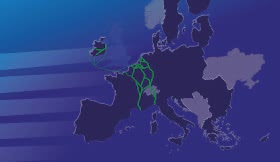
as Germany and Belgium are implementing transpositions of the
RED III Directive different from that of the Netherlands, the latter has
announced that it may make changes to its transposition.
















 - Via Raffaele Paolucci 17r/19r - 16129 Genoa - ITALY


