Independent journal on economy and transport policy
05:21 GMT+2
This page has been automatically translated by Original news
ENVIRONMENT
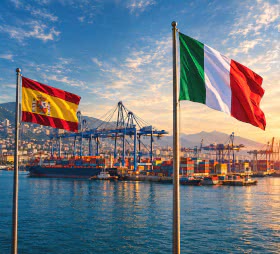
GreenMedPorts has taken a pragmatic approach to the development of green maritime corridors in the Mediterranean
Querci: "they are not simply less emissive routes, but new economic and industrial infrastructures"
Livorno
April 23, 2026
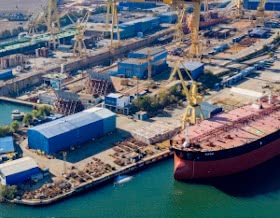
A more pragmatic approach to developing connections
maritime "green" in the Mediterranean has emerged
during the first ten months of work within GreenMedPorts,
the flagship European project of the Interreg NEXT MED programme, which is
coordinated by the Port System Authority of the Tyrrhenian Sea
Northern and which includes institutions and research centers
of six Mediterranean countries, including the participation of
of Algeria.
On the other hand, the current moment is characterized by
geopolitical tensions and uncertainties that lead to concrete
also on the issue of the sustainability of maritime services and
port ones. In this scenario, the manager pointed out
Development and Innovation of the Port Authority of the Northern Tyrrhenian Sea,
Antonella Querci, "ports can no longer limit themselves to
intercept trafficking. They must become platforms of resilience,
capable of adapting, of offering solutions, of guaranteeing continuity
operational even in conditions of uncertainty". On the occasion
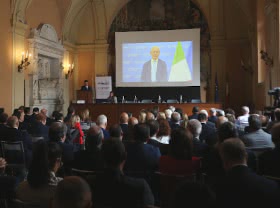
of yesterday's presentation of the first results of the project at the
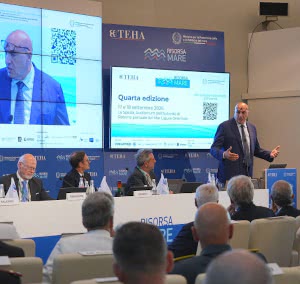
Ferretti Room of the Old Fortress of Livorno, Querci has
specified that "GreenMedPorts is not a project
environmental in the strict sense: its value - he explained - lies in the
in the ability to integrate environmental standards,
performance certifications (such as the "Green Label Port")
and cooperation between geographically distant airports'. For the
manager of the Tuscan Port Authority is precisely this
integration to transform GreenMedPorts into something more
of a project: "It makes it - he pointed out - a real and
intangible infrastructure, capable of affecting over time
on how logistics chains will be organised
in the Mediterranean", because, in perspective, "those who
will be able to define shared standards, to produce
reliable data and to build certification systems
will also be able to guide the choices
of operators and, therefore, to govern the flows".
Referring to the Mediterranean green corridors, Querci noted
which "are not simply less emissive routes, but new ones
economic and industrial infrastructures, in which three
fundamental elements: the energy dimension, the
and the commercial dimension". In this context,
the competitiveness of ports also plays a role: in the Mediterranean -
observed - or it is possible "to build green corridors that
hold the two banks together, reducing asymmetries and favoring
a shared transition, or there is a risk of accentuating the
differences between ports that will be able to position themselves within
these new networks and ports that will be excluded".
During the conference presenting the project, the
also talked about the application of the system to maritime transport
ETS for greenhouse gas emission allowance trading
of the EU. Although the introduction of a CO2 price is a
strong economic signal - it was noted - however the ETS is
a pricing policy, not an industrial one, and without real investments
in alternative fuels and infrastructure, the only pressure
risks producing a "boomerang effect",
shifting traffic to less regulated non-EU ports and
damaging the competitiveness of Mediterranean ports. In its
speech, Luca Brandimarte, Head of Ports, Logistics and
Competition of Assarmatori recalled that the revision of the system
ETS is now in its final stages, with "the proposal of the
Commission which is expected by July" and has
highlighted the criticalities of a mechanism that - has
underlined - risks penalising the most
such as transhipment, the Motorways of the Sea and the
island connections.
- Via Raffaele Paolucci 17r/19r - 16129 Genoa - ITALY
phone: +39.010.2462122, fax: +39.010.2516768, e-mail
VAT number: 03532950106
Press Reg.: nr 33/96 Genoa Court
Editor in chief: Bruno Bellio No part may be reproduced without the express permission of the publisher






 A more pragmatic approach to developing connections
maritime "green" in the Mediterranean has emerged
during the first ten months of work within GreenMedPorts,
the flagship European project of the Interreg NEXT MED programme, which is
coordinated by the Port System Authority of the Tyrrhenian Sea
Northern and which includes institutions and research centers
of six Mediterranean countries, including the participation of
of Algeria.
A more pragmatic approach to developing connections
maritime "green" in the Mediterranean has emerged
during the first ten months of work within GreenMedPorts,
the flagship European project of the Interreg NEXT MED programme, which is
coordinated by the Port System Authority of the Tyrrhenian Sea
Northern and which includes institutions and research centers
of six Mediterranean countries, including the participation of
of Algeria.







 - Via Raffaele Paolucci 17r/19r - 16129 Genoa - ITALY


