Independent journal on economy and transport policy
15:55 GMT+2
TRADE
The White House denounces the practice of "illegal" port transhipment to evade US duties
The creation of a customs control system based on artificial intelligence to combat the phenomenon has been proposed
Washington
August 25, 2026
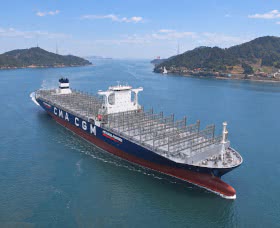
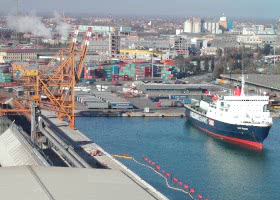
Transhipment, the transhipment activity in ports that
consists of transferring cargo from one ship to another in its
journey to the final destination and which was born
from the need of the largest shipping companies
concentrate large quantities of transported containers on a few
major shipping routes from large-capacity vessels, to
exploiting economies of scale, has now come into the crosshairs
of the White House denouncing the use of a form of transshipment
which is deemed illegal. If transhipment as an operation
purely logistical is "legitimate",
the federal administration led by Donald Trump denounces a use of
unlawful of this practice consisting of minimal or
of goods in an intermediate port/country of the route
in order to artificially change the country of origin
declared, to evade duties or avoid incurring restrictions
commercial activities.
A new report from the Office of Trade and Manufacturing Policy
titled "The Great Transshipment Scam",
which has been published in recent days, there goes - as you can
he says - down heavy denouncing the presence of a net
of more than 40 nations that would be used to circumvent tariffs
on Chinese goods, which after the introduction of tariffs
are processed, relabeled or simply
re-exported through third countries. According to the Office of the House
Bianca, which was created during the first term of office at the
Trump presidency with the task of providing the president with analysis
and advice on commercial and industrial policies, this network
renamed "Shadow Transshipment Network",
would be used by Chinese exporters to route
goods to the United States via third countries,
The aim is to evade the duties imposed on Beijing.
For the authors of the report, "the genesis of this
scam dates back to 2018, when President Trump imposed tariffs
Section 301 customs clearance to combat customs practices
unfair trade of China, the forced transfer of
intellectual property theft and the
mercantilism directed by the State". According to the report,
That measure would have effectively reduced the trade deficit
China, but would also have pushed many exporters
to divert shipments through countries with higher rates
by resorting to practices such as relabelling,
repackaging, false declarations of origin and minimum
façade workmanship, sufficient to make the goods appear as
without constituting a real substantial transformation.
This phenomenon, which the document defines as "Great
Reallocation", would gradually give life from a
structured ecosystem of production hubs, logistics platforms,
free zones and re-export centers scattered all over the world.
The report highlights that after the introduction of tariffs in 2018
under Section 301, China's share of the
American imports have started to decline, while
that of a group of third countries has grown in parallel.
According to the report, there would be over 40 participating nations
to the Shadow Transshipment Network on the basis of three levels: the
of the "Diversified Scale Leaders" made up of large
China's trading partners, which while maintaining industrial bases
diversified and important export platforms to the
USA, including Canada, European Union, India, Israel, Japan,
Mexico, South Korea and Taiwan, where illegal transshipment
would be present in the context of trade flows largely
legitimate. The second level would be made up of countries with strong
economic integration with China, including Brazil, Indonesia,
Malaysia, Thailand, Turkey and Vietnam, described as platforms
manufacturing and logistics sectors deeply linked to the
Chinese supply. In the third level they would fall from "small
opportunistic Chinese objectives", i.e. a group more
large number of smaller economies (including Cambodia, Panama, Costa Rica,
Jordan, United Arab Emirates, Kenya, Morocco and Kazakhstan) which
would offer specific advantages such as cheap labour,
Strategic port access or customs controls
less rigorous.
One of the central aspects of the report is the attempt to
quantify the phenomenon that, by cross-referencing five independent sources
- two governmental bodies (the Council of Economic Advisers and the Office of
Trade and Economic Analysis of the Department of Commerce) and three
private companies (Goldman Sachs, Exiger and Altana), it is believed to be included in
between 40 billion (Goldman Sachs) and 303 billion (Altana) dollars
per year.
In addition to the lost tax revenues, the report estimates
wider economic consequences. In the central scenario of
$75 billion of illegal transshipment per year (estimated
Exiger), the report estimates the loss of about 450,000 jobs
a reduction in annual gross domestic product of between
$113 and $150 billion and federal revenue losses
between $19 billion and $26 billion. In the scenario
of maximum exposure, based on Altana's estimate, the figures
they would rise to over 1.8 million jobs and over 450
billion dollars of GDP lost.
To stem this phenomenon, the report proposes the creation of
a "Border Detective", a customs control system
AI-powered software designed to integrate data from
shipping, routing histories, customs classifications,
analysis of corporate ownership relationships and tools
anomaly detection, including recognition
computerized images in containers. The declared goal
is to distinguish legitimate investments and nearshoring
genuine from the fictitious trade aimed only at changing the origin
of the goods.
As mentioned, the report does not hide the fact that, by creating a forest of
Different tariffs by country, the same Trump administration
may have given impetus to further diversification of the
global production and supply network, and is
evidently plausible to say that this was the effect.
"In 2025," the document specifies, "the Trump administration has
increased tariffs compared to a number of countries, with some of these countries
have faced higher rates than
others. These differentials, in themselves, can increase
the incentive for illegal transhipment. At the same time - underlines the
report - the Trump administration has taken steps
significant to prevent and discourage transhipment".
Among these, the report recalls that last June the
President Trump signed Executive Order 14411 with the purpose of
strengthening transparency obligations for importers,
increasing financial security requirements and introducing new
disclosure obligations on the ownership of companies
importers, but acknowledges that, however, "it is too much
to determine the net effect of tariff policies and
anti-transhipment of the administration", since the data
commercial and customs services become available only with a certain
delay and various provisions of the Executive Order still need to be
be fully implemented.
- Via Raffaele Paolucci 17r/19r - 16129 Genoa - ITALY
phone: +39.010.2462122, fax: +39.010.2516768, e-mail
VAT number: 03532950106
Press Reg.: nr 33/96 Genoa Court
Editor in chief: Bruno Bellio No part may be reproduced without the express permission of the publisher






 Transhipment, the transhipment activity in ports that
consists of transferring cargo from one ship to another in its
journey to the final destination and which was born
from the need of the largest shipping companies
concentrate large quantities of transported containers on a few
major shipping routes from large-capacity vessels, to
exploiting economies of scale, has now come into the crosshairs
of the White House denouncing the use of a form of transshipment
which is deemed illegal. If transhipment as an operation
purely logistical is "legitimate",
the federal administration led by Donald Trump denounces a use of
unlawful of this practice consisting of minimal or
of goods in an intermediate port/country of the route
in order to artificially change the country of origin
declared, to evade duties or avoid incurring restrictions
commercial activities.
Transhipment, the transhipment activity in ports that
consists of transferring cargo from one ship to another in its
journey to the final destination and which was born
from the need of the largest shipping companies
concentrate large quantities of transported containers on a few
major shipping routes from large-capacity vessels, to
exploiting economies of scale, has now come into the crosshairs
of the White House denouncing the use of a form of transshipment
which is deemed illegal. If transhipment as an operation
purely logistical is "legitimate",
the federal administration led by Donald Trump denounces a use of
unlawful of this practice consisting of minimal or
of goods in an intermediate port/country of the route
in order to artificially change the country of origin
declared, to evade duties or avoid incurring restrictions
commercial activities.









 - Via Raffaele Paolucci 17r/19r - 16129 Genoa - ITALY


